Evaluating Used Injection Molding Machines: Major Brands vs. Generic Models
Understanding Used Injection Molding Machines
Used injection molding machines remain an attractive option for manufacturers looking to expand production capacity while controlling equipment investment. These machines melt plastic resin and inject it into a mold cavity under controlled pressure. After cooling, the material solidifies into the required plastic component.
Injection molding is widely used in automotive components, consumer products, electronics, medical devices, and industrial parts. For buyers evaluating used equipment, however, the purchase price is only one part of the decision. Machine condition, production accuracy, maintenance requirements, spare parts availability, and long-term support can significantly affect the actual cost of ownership.
Injection molding machines are commonly divided into horizontal and vertical configurations.
Horizontal injection molding machines are the most widely used option for general plastic production. Their configuration supports a broad range of molds and is suitable for high-volume manufacturing.
Vertical injection molding machines are often selected for specialized applications such as insert molding. Their vertical clamping and injection configuration can provide advantages when precise insert positioning is required.
When selecting a used plastic injection molding machine, buyers should match the machine specifications with the product and mold requirements. Key parameters include:
-
Clamping force
-
Injection capacity
-
Injection speed
-
Mold dimensions
-
Machine control system
-
Cooling performance
-
Energy consumption
-
Maintenance history
For precision plastic components, stable injection control and consistent temperature management are particularly important. Therefore, buyers should evaluate the machine’s technical condition rather than focusing only on its age or purchase price.
1. Why Consider Established Injection Molding Machine Brands?
For used equipment buyers, established manufacturers such as Haitian and Yizumi can offer important advantages in terms of engineering, reliability, and aftermarket support.
Advanced Process Control
Major injection molding machine manufacturers typically integrate more sophisticated process-control technologies into their equipment. Features such as stress compensation systems can help maintain stable molding conditions and reduce production variation.
This becomes particularly important when producing precision components or running demanding molds for extended periods.
Accurate Temperature Control
Temperature stability directly affects plastic processing, cycle time, energy consumption, and finished-part quality.
Established machines commonly use advanced temperature monitoring and control systems to keep resin processing conditions within the required range. Consistent thermal control can help reduce defects and improve production repeatability.
Durable Machine Construction
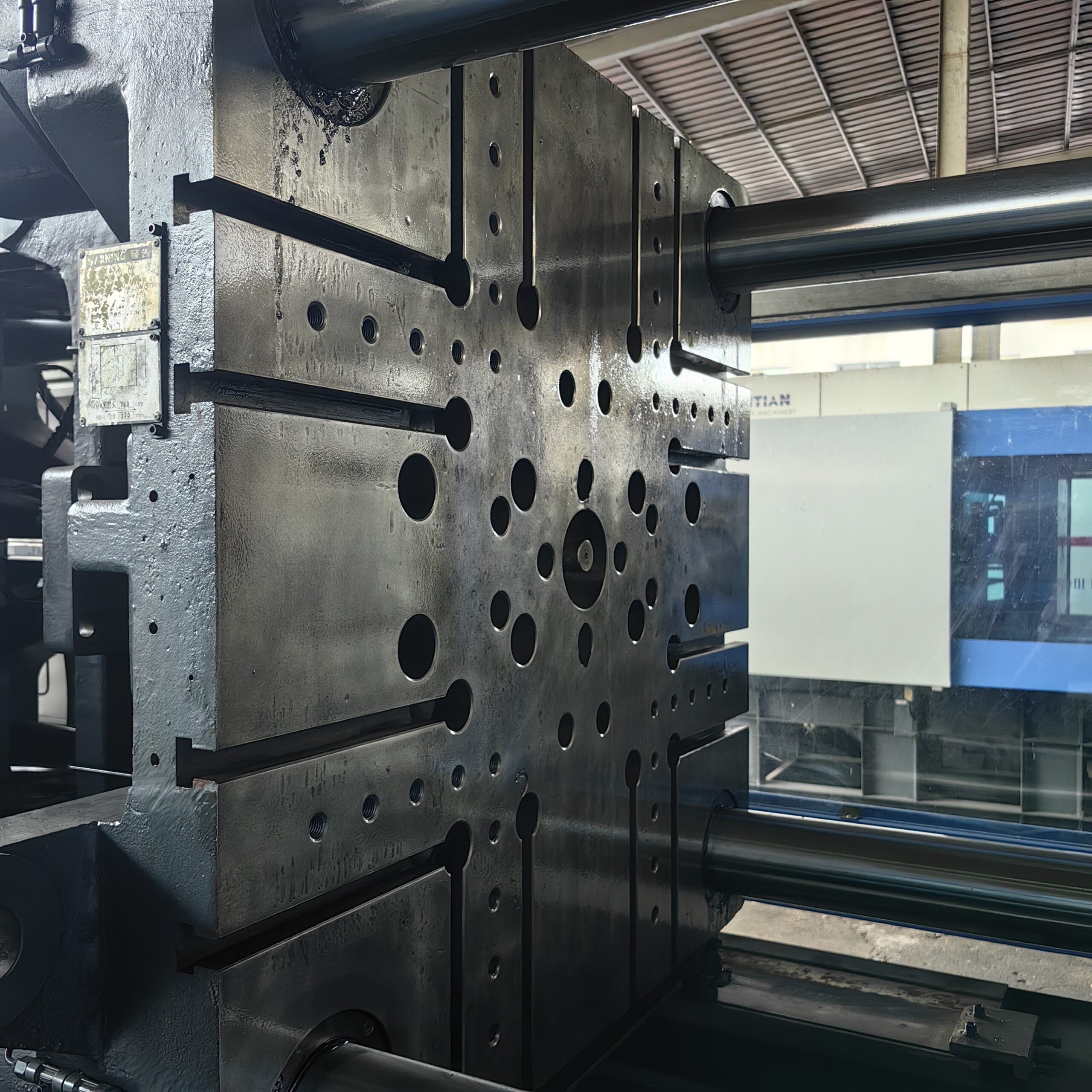
Used equipment must withstand continued production after years of operation. Established brands generally use robust mechanical and hydraulic or servo components designed for demanding industrial environments.
Although a branded machine may have a higher acquisition cost than a generic model, better component durability can reduce unexpected maintenance and extend useful service life.
Spare Parts and Technical Support
Another major advantage is aftermarket support.
When purchasing a used injection molding machine, access to replacement parts and technical expertise can directly affect production downtime. Established brands typically have broader service networks and more recognizable component specifications.
For manufacturers operating continuous production lines, faster troubleshooting and easier access to spare parts can provide significant operational value.
2. Used Injection Molding Machines: Major Brands vs. Generic Models
The difference between branded and generic used machines becomes clearer when buyers compare engineering quality, production performance, maintenance, and long-term reliability.
| Evaluation Factor | Major Brand Used Machine | Generic Used Machine |
|---|---|---|
| Machine Design | Proven engineering and established platform | Design quality may vary by manufacturer |
| Production Stability | Generally consistent under continuous production | Performance depends heavily on machine condition |
| Injection Precision | Advanced control systems available on many models | Control capability may be more limited |
| Component Quality | Established component standards | Component specifications may vary |
| Spare Parts | Generally easier to identify and source | Availability can be uncertain |
| Technical Support | Established service and technical resources | Often more limited |
| Maintenance Risk | More predictable when service history is available | Potentially higher uncertainty |
| Resale Value | Generally stronger | Often lower |
| Market Liquidity | Wider secondary-market demand | Smaller buyer pool |
| Long-Term Value | Often stronger for demanding production | More attractive when initial cost is the primary concern |
Performance and Production Consistency
Performance consistency is one of the most important factors when evaluating second-hand injection molding equipment.
Established brands often benefit from mature machine designs and refined control systems. This can be particularly valuable when producing thin-wall components, electronic housings, or other parts requiring stable injection conditions.
Generic machines may have a lower purchase price, but buyers should carefully inspect their mechanical condition, controller performance, hydraulic or servo system, and previous maintenance records.
Maintenance and Downtime Considerations
The initial equipment price does not represent the complete cost of a used machine.
Unexpected hydraulic failures, electrical problems, worn screws and barrels, or controller issues can create additional repair costs. More importantly, unplanned downtime can interrupt customer deliveries and reduce production capacity.
For this reason, buyers should evaluate total cost of ownership (TCO) rather than comparing machines only by their purchase prices.
3. What to Check Before Buying a Used Injection Molding Machine
A structured inspection can help buyers reduce the risks associated with second-hand equipment.
1. Review the Machine’s Maintenance History
Ask for available maintenance and repair records. Pay particular attention to major component replacements, hydraulic system maintenance, servo motor condition, and controller repairs.
A well-maintained older machine can sometimes provide better value than a newer machine with poor maintenance records.
2. Inspect the Injection Unit
Check the condition of the screw, barrel, nozzle, and injection mechanism.
Wear in the injection unit can affect shot consistency, pressure stability, and plasticizing performance. These factors directly influence finished-part quality.
3. Check the Clamping System
The clamping system should maintain stable mold closing force throughout production.
Buyers should inspect the platen condition, tie bars, hydraulic or servo system, and mold-opening and closing movements.
4. Test Temperature and Process Controls
Run the machine under operating conditions and verify temperature control, pressure monitoring, injection speed, and cycle repeatability.
This is particularly important when purchasing equipment for precision molding applications.
5. Confirm Spare Parts Availability
Before purchasing a used injection molding machine, verify that critical replacement parts are still available.
This includes controllers, sensors, valves, servo components, heaters, motors, and other wear components.
4. Resale Value and Market Liquidity
Resale value is another important factor when evaluating used injection molding equipment.
Established brands generally maintain stronger secondary-market recognition. Buyers are often more willing to purchase a used machine when the manufacturer has a proven reputation for reliability, spare parts availability, and technical support.
Stronger Resale Value
A recognizable machine brand can make future resale easier. This is particularly relevant for manufacturers that frequently upgrade production equipment or replace machines as product requirements change.
Machines from established brands may therefore recover a greater proportion of their original investment compared with less recognizable generic equipment.
Better Secondary-Market Liquidity
Market liquidity refers to how easily equipment can be sold and how quickly a reasonable buyer can be found.
Branded used injection molding machines typically appeal to a broader range of manufacturers. This can shorten selling times and reduce depreciation pressure.
Generic machines may attract fewer buyers because of concerns about machine quality, replacement parts, controller compatibility, and technical support.
5. Evaluating Total ROI When Buying Used Molding Equipment
The most economical machine is not necessarily the one with the lowest purchase price.
For B2B buyers, the overall investment should consider:
-
Initial purchase price
-
Transportation and installation
-
Machine refurbishment
-
Spare parts
-
Preventive maintenance
-
Energy consumption
-
Production downtime
-
Scrap and defect rates
-
Expected service life
-
Future resale value
A branded used machine may require a larger initial investment, but its combination of production stability, support availability, lower maintenance risk, and stronger resale value can improve long-term ROI.
Conversely, a generic model may be appropriate when the application is less demanding and the buyer has sufficient in-house technical resources to manage maintenance and repairs.
6. How to Choose the Right Used Injection Molding Machine
The right equipment depends on the application, production volume, mold requirements, and available maintenance capabilities.
Before purchasing, buyers should establish the following specifications:
-
Required clamping force based on projected mold and part requirements.
-
Injection capacity based on part weight and material characteristics.
-
Required injection speed and pressure for the target product.
-
Mold dimensions to ensure compatibility with the machine.
-
Controller and automation requirements for the production line.
-
Machine condition and maintenance history to estimate refurbishment costs.
-
Spare parts availability to minimize future downtime.
-
Resale potential when evaluating long-term investment value.
For demanding applications, a well-maintained machine from an established manufacturer can provide a more predictable production platform.
Technical Summary
When evaluating used injection molding machines, B2B buyers should look beyond the initial purchase price. Machine condition, injection precision, temperature control, durability, maintenance requirements, spare parts availability, and technical support all influence the actual value of second-hand equipment.
Established brands such as Haitian and Yizumi can provide advantages in engineering maturity, production consistency, service support, and secondary-market liquidity. Generic machines may offer lower upfront costs, but buyers should conduct a more detailed inspection of machine condition and long-term maintenance risks.
Ultimately, selecting the right used plastic injection molding machine requires balancing acquisition cost with production reliability, total cost of ownership, expected service life, and future resale value.



Add comment