
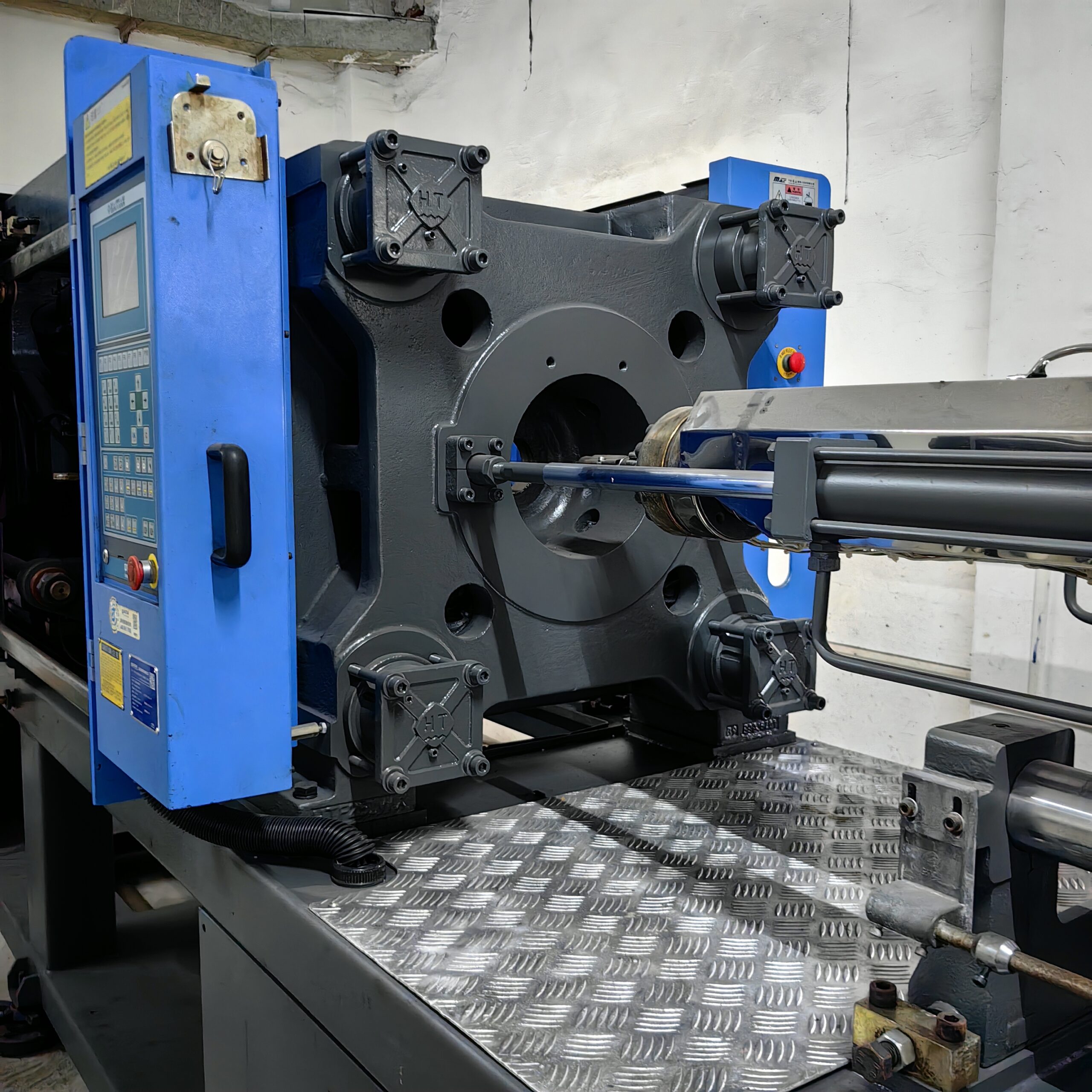
How to Choose a Used Automatic PET Molding Machine for Preform Production
When setting up or expanding a beverage packaging line, a used automatic PET molding machine can offer an attractive cost-to-performance ratio. However, purchasing pre-owned PET injection molding equipment requires a different approach from buying a new machine.
A new machine can be configured around a specific preform design, mold, and production target. A used machine, by contrast, already exists in the market. Buyers must identify equipment that provides the closest technical match to their existing production requirements.
Price alone is therefore a poor basis for equipment selection.
A machine with insufficient shot capacity can produce short shots. Inadequate clamping force can cause preform flash. Incorrect tie-bar spacing can prevent the mold from being installed at all. These problems can turn an apparently low-cost machine into an expensive production bottleneck.
The most reliable approach is to evaluate a used PET injection molding machine through three engineering requirements:
- Injection capacity must match preform shot weight.
- Clamping force must withstand mold cavity pressure.
- Machine dimensions must physically accommodate the mold.
This three-part matching process helps beverage packaging manufacturers avoid costly retrofits, unstable production, and unnecessary downtime.
Why Used PET Injection Molding Machines Require Engineering-Based Selection
Used equipment purchasing is fundamentally a matching problem rather than a price comparison.
The machine must work with the specific preform mold, material, cycle requirements, and production volume. A machine may appear suitable based on its nominal tonnage while failing on another critical specification.
For example:
- A large clamping force does not guarantee sufficient injection capacity.
- A sufficient shot size does not mean the mold will fit between the tie bars.
- A physically compatible machine may still have an unsuitable plasticizing unit.
- A low purchase price may become costly if major components require replacement.
Therefore, buyers should evaluate the complete machine-to-mold relationship before making a purchasing decision.
1. Match Shot Capacity to Preform Weight
The first engineering check is the injection unit.
The machine must provide enough melt volume to fill every cavity in the mold while maintaining an appropriate operating margin. Running continuously at the machine’s maximum rated shot capacity can create process instability.
Calculate the Total Shot Weight
Start with the weight of one preform and the number of mold cavities.
The total plastic weight required for each injection cycle is:
Total Shot Weight (g)=Individual Preform Weight (g)×Number of Mold Cavities\text{Total Shot Weight (g)} = \text{Individual Preform Weight (g)} \times \text{Number of Mold Cavities}
For example, a mold producing 32 preforms at 25 g each requires:
25×32=800 g25 \times 32 = 800\text{ g}
The injection unit must therefore provide sufficient capacity for the complete shot rather than simply matching the weight of one preform.
Apply an Injection Capacity Safety Margin
PET injection units should not normally operate at 100% of their theoretical shot capacity.
Operating too close to the maximum can contribute to melt temperature variation and unstable processing. At the other extreme, selecting an excessively large machine can increase melt residence time and contribute to thermal degradation and acetaldehyde (AA) buildup.
For PET processing, the total shot weight should ideally occupy approximately 35% to 85% of the machine’s maximum rated shot capacity.
A practical sizing calculation is:
Required Machine Shot Capacity (g)=Total Shot Weight (g)0.85\text{Required Machine Shot Capacity (g)} = \frac{\text{Total Shot Weight (g)}}{0.85}
This provides a simple starting point for comparing the required shot with available used machines.
What Buyers Should Check
When reviewing a used PET machine, compare:
- Individual preform weight
- Mold cavity count
- Calculated total shot weight
- Theoretical machine shot capacity
- Actual operating conditions
- Screw and barrel condition
The objective is to find a machine that provides sufficient capacity without creating an unnecessarily large melt residence volume.
2. Verify Clamping Force Against Mold Requirements
Injection capacity is only one side of the machine selection process.
During injection, molten PET generates substantial pressure inside the mold cavities. The clamping system must provide enough force to keep the mold halves closed throughout the injection cycle.
Insufficient clamping force can cause the mold to open slightly at the parting line.
This can result in:
- Preform flash
- Wall-thickness variation
- Dimensional defects
- Mold damage
- Increased rejection rates
Calculate the Required Clamping Force
The required clamping force depends primarily on the projected area of the mold and the pressure acting on that area.
First, calculate the total projected cavity area:
A=Total Projected Cavity Area (cm2)A = \text{Total Projected Cavity Area (cm}^2\text{)}
The area should include the combined projected area of all preform cavities at the mold parting line.
Then apply the appropriate PET cavity pressure factor.
For PET preform molding, a typical engineering factor is approximately:
0.6 to 0.8 tons/cm²
This is equivalent to approximately:
4 to 6 tons/in²
The basic clamping force calculation is:
Required Clamping Force (Tons)=A×P×1.15\text{Required Clamping Force (Tons)} = A \times P \times 1.15
Where:
- A = total projected cavity area in cm²
- P = cavity pressure factor of 0.6–0.8 tons/cm²
- 1.15 = safety factor
Why the Safety Factor Matters
The calculated value should not be treated as an exact operating requirement without considering the actual mold and process.
A 1.15 safety factor provides additional allowance for process variation and helps reduce the risk of insufficient clamping force.
For used machinery, buyers should also evaluate the condition of the clamping system itself. Nominal machine tonnage means little if the platen, toggle mechanism, hydraulic system, or tie bars have significant wear.
3. Confirm Physical Mold Compatibility
A machine can have sufficient shot capacity and clamping force while still being unsuitable for a specific mold.
Physical compatibility is therefore the third major selection requirement.
Before purchasing a used automatic PET molding machine, buyers should compare the machine’s mechanical dimensions with the actual mold specifications.
| Mechanical Feature | Selection Requirement | Risk if Mismatched |
|---|---|---|
| Tie-Bar Clearance (H × V) | Must exceed overall mold width and height, including water manifold connections | Mold cannot fit between the tie bars |
| Mold Thickness | Mold shut height must fall within the machine’s platen adjustment range | Mold cannot clamp correctly or achieve proper toggle lockup |
| Ejection Stroke & Force | Ejection stroke must exceed preform length plus required core clearance | Preforms may not release cleanly and can cause robot cycle jams |
| Plasticizing Unit (L/D Ratio) | PET applications commonly use an L/D ratio of 22:1 to 24:1 | Poor melt homogeneity, color streaks, and elevated AA levels |
Check Tie-Bar Clearance First
Tie-bar spacing is one of the easiest specifications to overlook during secondhand equipment sourcing.
The mold must physically pass through the available horizontal and vertical tie-bar opening. Buyers should also account for connections and components that extend beyond the main mold body, such as water manifolds.
A machine with sufficient tonnage is useless if the mold cannot enter the platen area.
Verify Mold Thickness and Shut Height
The mold thickness must fall within the machine’s available shut-height adjustment range.
If the mold is outside this range, the machine may be unable to establish the required clamping position.
This can prevent proper mold lockup and create additional mechanical problems during operation.
Check Ejection Stroke and Force
PET preforms must release cleanly from the cores before the next cycle begins.
The machine’s ejector system must therefore provide sufficient stroke and force for the mold design.
Insufficient ejection travel can leave preforms on the cores. In an automated line, this can interfere with robotic removal and cause repeated cycle interruptions.
4. Evaluate the Plasticizing Unit for PET Processing
Mechanical compatibility is not limited to mold dimensions.
The condition and configuration of the plasticizing unit can directly affect PET melt quality.
A plasticizing system designed for PET should provide appropriate melt homogenization and residence-time control.
For used PET injection equipment, buyers should pay particular attention to the screw and barrel condition and the screw’s L/D ratio.
A typical PET-oriented L/D ratio is approximately 22:1 to 24:1.
An unsuitable or excessively worn plasticizing unit can contribute to:
- Poor melt homogeneity
- Color streaks
- Inconsistent processing
- Increased material degradation
- Elevated acetaldehyde levels
Therefore, a used machine inspection should include screw and barrel wear rather than relying only on the machine’s nameplate specifications.
Used PET Machine Selection Checklist
Before purchasing secondhand PET injection molding equipment, procurement and engineering teams can use the following checklist:
Injection System
- ☐ Calculate individual preform weight.
- ☐ Confirm mold cavity count.
- ☐ Calculate total shot weight.
- ☐ Check the 35%–85% operating range.
- ☐ Calculate required machine shot capacity.
- ☐ Inspect screw and barrel wear.
Clamping System
- ☐ Calculate total projected cavity area.
- ☐ Select the appropriate 0.6–0.8 tons/cm² pressure factor.
- ☐ Apply the 1.15 safety factor.
- ☐ Verify actual clamping system condition.
- ☐ Inspect platen parallelism and tie-bar condition.
Mold Compatibility
- ☐ Confirm horizontal and vertical tie-bar clearance.
- ☐ Check mold thickness and machine shut height.
- ☐ Verify ejector stroke.
- ☐ Verify ejector force.
- ☐ Include water manifold and connection dimensions.
PET Processing Capability
- ☐ Confirm suitable plasticizing unit configuration.
- ☐ Check the L/D ratio.
- ☐ Inspect screw and barrel condition.
- ☐ Evaluate previous machine operating history where available.
- ☐ Review test-run results before shipment.
How Manyi Helps Buyers Match Used PET Injection Machines
Selecting a used automatic PET molding machine requires more than checking machine tonnage and purchase price.
Manyi specializes in sourcing, inspecting, and supplying secondhand injection molding machines, auxiliary equipment, and custom machinery solutions for plastic processors worldwide.
Rigorous Technical Verification
Before equipment is supplied, Manyi can evaluate critical mechanical and hydraulic conditions, including:
- Hydraulic pressure stability
- Screw and barrel wear
- Platen parallelism
- Tie-bar condition and tension
- Clamping system performance
- General machine operating condition
This inspection process helps buyers understand the actual condition of pre-owned equipment before committing to production.
Precise Machine-to-Mold Matching
Manyi’s engineering team can evaluate the customer’s:
- Preform weight
- Mold cavity count
- Mold dimensions
- Required shot capacity
- Clamping requirements
- Ejection requirements
The team can then compare these requirements against available used machinery to identify equipment with a suitable technical configuration.
This approach reduces the risk of purchasing a machine that appears attractive on paper but fails to meet the actual production requirements.
End-to-End B2B Support
Manyi can support the sourcing process from initial technical verification through equipment delivery.
Support can include:
Mold dimensional checks → Machine matching → Inspection → Video dry-run testing → Export logistics → Installation support
For international buyers, this integrated process provides a more practical way to manage secondhand equipment procurement.
Conclusion: Choose Used PET Machinery by Engineering Fit, Not Price
A used automatic PET molding machine can reduce the initial investment required to expand a beverage packaging line. However, the lowest purchase price does not necessarily represent the lowest total production cost.
The right machine must match the application in three critical areas:
Shot capacity → Clamping force → Physical mold compatibility
Buyers should calculate total preform shot weight, maintain an appropriate injection capacity margin, verify clamping force against projected cavity area, and confirm tie-bar, mold thickness, and ejection requirements.
The plasticizing unit also deserves attention, particularly its screw and barrel condition and PET-appropriate L/D ratio.
By treating secondhand equipment sourcing as an engineering matching process, manufacturers can reduce the risk of short shots, flash, mold incompatibility, robotic jams, and unexpected production downtime.
Manyi helps plastic processors evaluate and source used injection molding machinery based on actual production requirements rather than machine price alone.



Add comment