
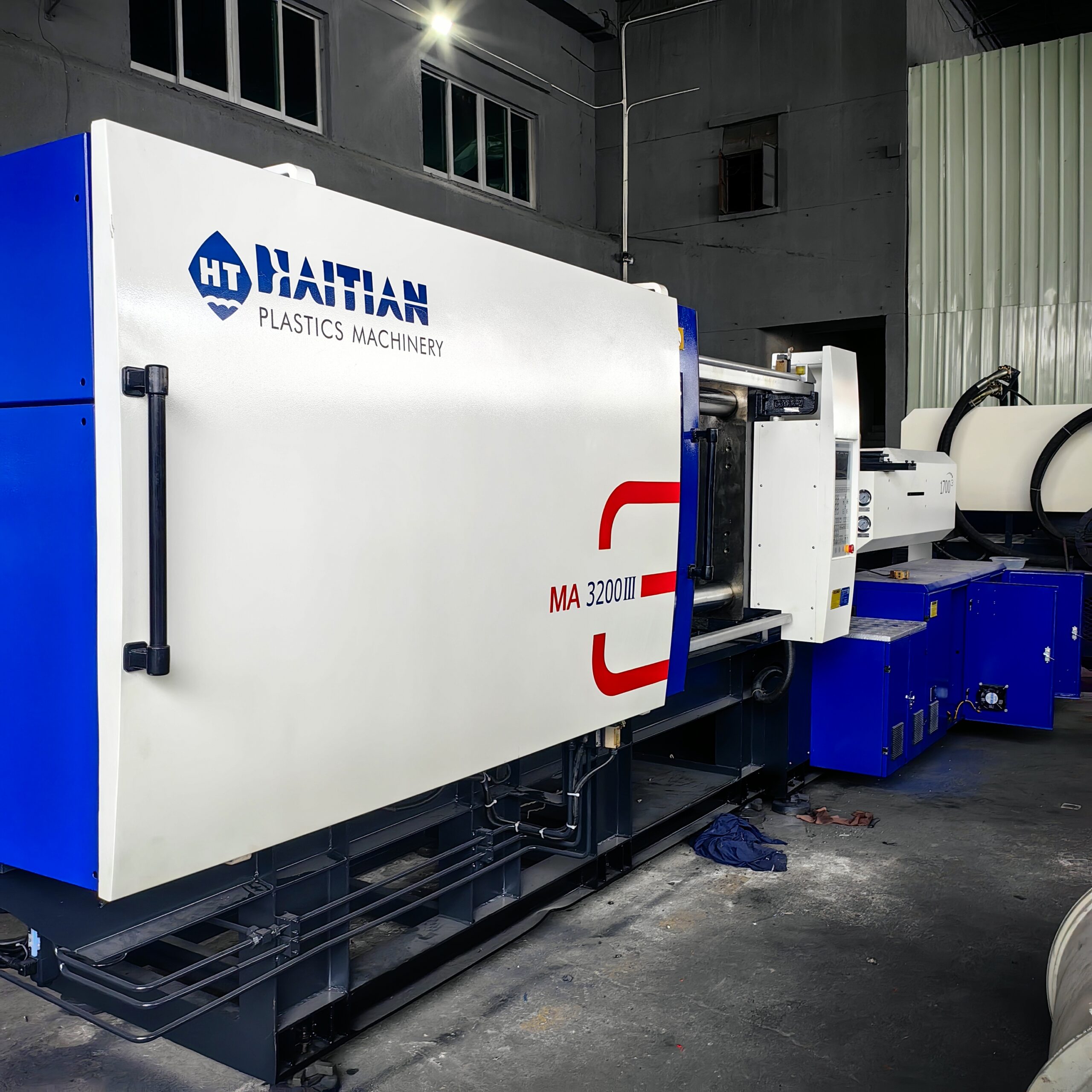
In the high-stakes arena of precision manufacturing—where aerospace components, medical devices, and micro-electronics are born—the margin for error is non-existent. For injection molding professionals, the greatest enemy is “fluctuation.” Variations in material viscosity, ambient temperature, and hydraulic pressure often lead to dimensional drift, causing rejected parts and wasted capital.
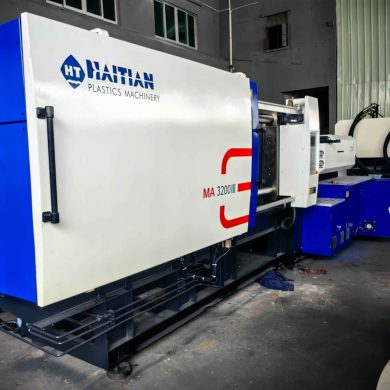
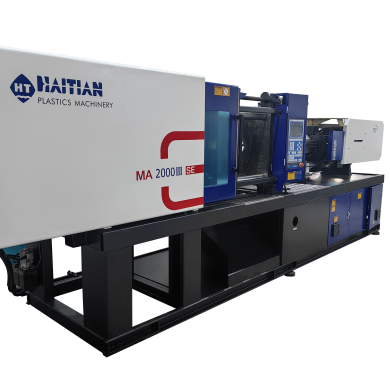
However, Haitian (Haitian International), a global leader in injection molding technology, has engineered a solution that effectively “imprisons” these variables. Through its sophisticated Closed-Loop Control System, Haitian machines achieve a repetitive precision of ±0.01mm. At Manyi, we specialize in supplying high-quality used Haitian machinery because we recognize that this precision-locking technology remains robust and world-class, even in the secondary market.
1. Defining the Closed-Loop: The Difference Between Guessing and Knowing
To understand why Haitian machines lead the industry, one must distinguish between “open-loop” and “closed-loop” logic. In an open-loop system, the machine sends a command (e.g., “move the screw at 50mm/s”) and assumes the action occurred correctly.
The Real-Time Correction Cycle
Haitian’s Closed-Loop System operates on a philosophy of constant skepticism. It utilizes a continuous feedback loop that follows a three-step cycle:
-
Monitor: High-precision sensors track the exact position, speed, and pressure of the injection unit.
-
Compare: The controller compares this real-time data against the “Golden Profile” (the ideal parameters).
-
Adjust: If the system detects a deviation of even a fraction of a millimeter, it sends a corrective signal to the servo valves in milliseconds.
This active intervention ensures that the process does not just “aim” for precision but “locks” onto it, keeping fluctuations trapped within a microscopic ±0.01mm cage.
2. The Hardware of Stability: High-Response Servo Valves
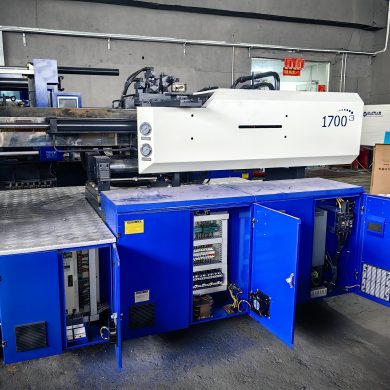
The “muscles” of any closed-loop system are its valves. Haitian integrates High-Response Servo Valves that act as the gatekeepers of hydraulic energy.
Millisecond Response Times
In a typical injection cycle, the transition from high-speed filling to high-pressure packing (the V/P changeover) happens in the blink of an eye. Haitian’s servo valves feature ultra-fast response times, allowing the machine to shift hydraulic flow with surgical accuracy.
Eliminating Inertia
Traditional machines often suffer from “overshoot”—where the screw moves further than intended due to mechanical inertia. By utilizing closed-loop feedback, the Haitian controller anticipates the stop point and applies counter-pressure through the servo valve, effectively “braking” the screw at the exact coordinate required. This level of mechanical discipline is why Manyi’s Haitian machines remain the preferred choice for technical molding.
3. The Central Nervous System: High-Resolution Sensors
A control system is only as good as the data it receives. Haitian equips its machines with a network of high-resolution sensors that act as the “eyes and ears” of the production process.
Real-Time Pressure Transducers
Pressure fluctuations are the primary cause of “short shots” or “flash.” Haitian uses high-sensitivity pressure sensors located directly in the injection line (and often in the mold cavity). These sensors detect minute changes in material resistance. If the melt viscosity increases due to a batch variation in raw material, the closed-loop system immediately increases the force to maintain a consistent fill volume.
Linear Position Sensors
To achieve ±0.01mm accuracy, the machine must know the screw’s location with extreme granularity. Haitian utilizes magnetostrictive linear scales or high-resolution encoders. These sensors provide the “cage” with its physical dimensions, ensuring that every shot starts and ends at the same physical coordinate, cycle after cycle.
4. The Intelligence Behind the Machine: Adaptive Algorithms
Hardware alone cannot achieve ±0.01mm precision; it requires an “intellectual” layer to interpret the data. Haitian’s proprietary control software features Adaptive Algorithms that learn from the environment.
Compensation for Thermal Expansion
As the injection molding machine runs, the oil heats up, and the metal components expand slightly. A “dumb” machine would produce different parts at 8:00 AM than it does at 4:00 PM. Haitian’s adaptive control automatically compensates for these thermal shifts. It adjusts the pressure and timing in real-time to ensure the final product remains identical, regardless of the factory’s ambient temperature.
Intelligent V/P Changeover
The most critical moment in injection molding is the transition from “Filling” to “Holding” (Packing). Haitian’s closed-loop system monitors the pressure curve and executes the V/P Changeover based on actual physical feedback rather than just a simple timer. This ensures that the mold is packed to the perfect density every time, eliminating internal stresses and warping.
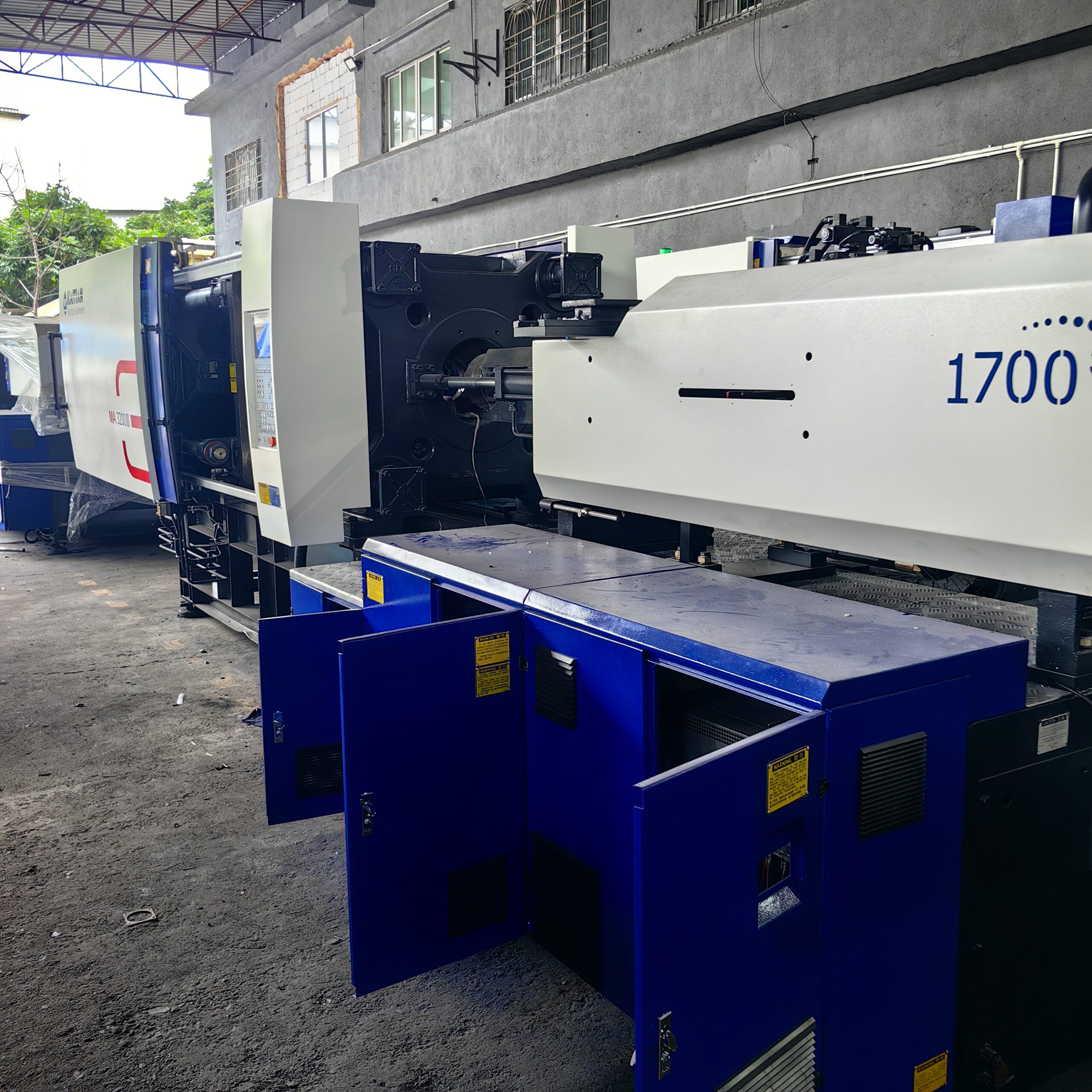
5. Why Manyi’s Used Haitian Machines Retain This “Lock.”
A common concern in the secondary market is whether a used machine can maintain factory-spec precision. At Manyi, our rigorous inspection and refurbishment process focuses specifically on the integrity of the closed-loop system.
Durability of the Haitian Architecture
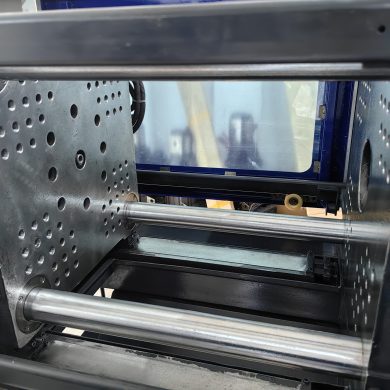
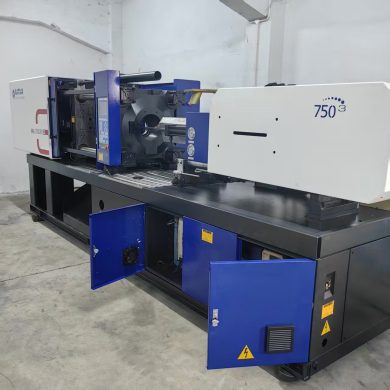
Haitian builds its machines with a “Heavy-Duty” philosophy. The frames are rigid, and the hydraulic circuits are designed for decades of service. Because the closed-loop system is digital and electronic, it does not “wear out” like a mechanical gear. With proper calibration of the sensors and valves—which Manyi performs on every unit—a used Haitian machine can deliver the same ±0.01mm precision as a brand-new model, but at a fraction of the capital expenditure.
ROI and “Proactive Quality”
By investing in a used Haitian machine from Manyi, manufacturers move from “reactive sorting” (checking parts after they are made) to Proactive Quality. When you lock the process into a ±0.01mm cage, your “scrap rate” plummets. The machine essentially becomes a self-correcting quality control inspector.
6. Applications Demanding ±0.01mm Precision
Who benefits most from the Haitian closed-loop fortress?
-
Medical Components: Syringes, connectors, and surgical tools require absolute dimensional consistency for safety and fitment.
-
Optical Lenses: Even a 0.02mm deviation can ruin the refractive properties of a plastic lens.
-
Automotive Connectors: Multi-pin electrical connectors require perfect “flash-free” edges and tight tolerances to ensure reliable vehicle electronics.
-
Thin-Wall Packaging: Precision is required to maintain the structural integrity of the container while minimizing material usage (lightweighting).
7. Conclusion: The Master of Stability
In the world of injection molding, stability is the ultimate luxury. Haitian has mastered the art of “locking” the variables of heat, pressure, and motion into a controlled environment. Through high-response servo valves, high-resolution sensors, and adaptive software, the Haitian closed-loop system ensures that the ±0.01mm precision cage remains unbreakable.
At Manyi, we are proud to provide these high-performance used Haitian machines to the global market. We believe that every manufacturer deserves access to world-class precision without the prohibitive cost of new equipment. When you choose a Haitian machine from Manyi, you are not just buying a used asset; you are buying the “Invisible Guardian” of your product quality.

Add comment