
In the grand narrative of global sustainability, plastic has long been cast as the antagonist. We see it in the images of overflowing landfills and drifting ocean debris. However, a profound technological shift is occurring. We are moving away from the “Linear Economy” (Take-Make-Dispose) and toward a “Circular Economy,” where plastic is no longer viewed as terminal waste, but as a perpetual resource.
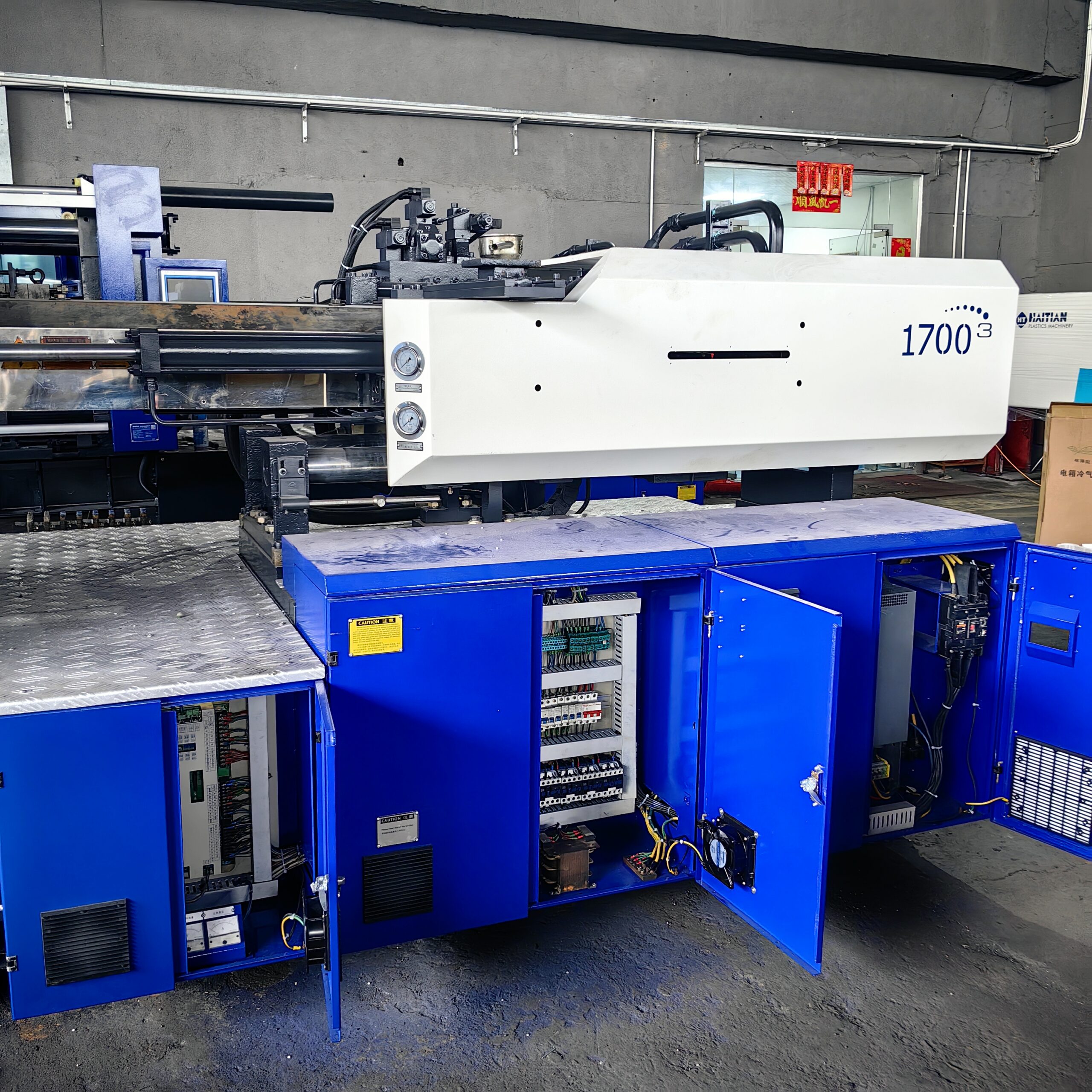
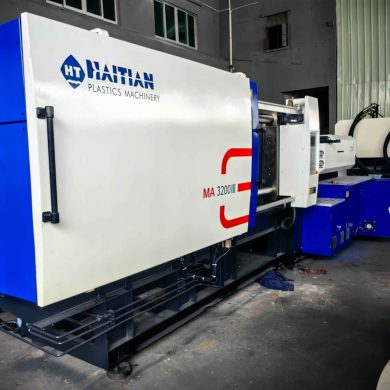
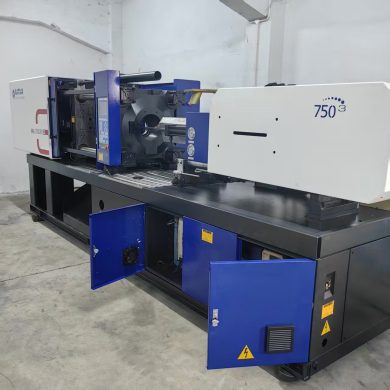
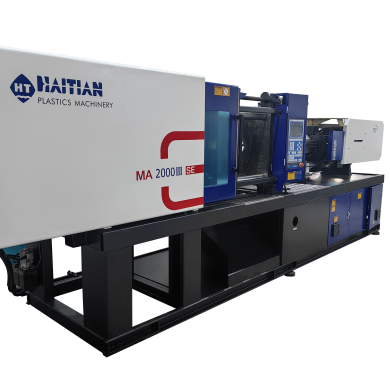
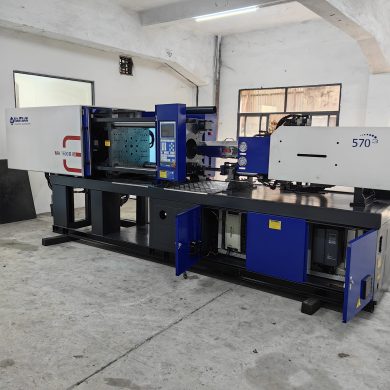
At the heart of this transformation is a single, powerful industrial pivot: the plastic injection molding machine. No longer just a tool for mass production, the modern injection molding machine has evolved into the “Reshaper” of our future. It is the critical industrial hub that takes fragmented Post-Consumer Recycled (PCR) resins or biodegradable pellets and breathes new life into them, bestowing them with precision, strength, and function. This article explores how advanced injection molding technology acts as the ultimate “alchemist,” turning plastic “waste” into economic “gold.”
1. The Industrial Hub: Connecting Waste to Rebirth
The circular economy is often discussed in abstract terms—policies, goals, and philosophies. But for a circle to close, there must be a physical mechanism that performs the “rebirth.”
Bridging the Gap
Recycling centers can sort and shred plastic, but those flakes have no utility on their own. The plastic injection molding machine is the bridge. It takes these irregular, recycled fragments and subjects them to controlled thermal and mechanical forces, forcing the material back into a state of utility.
-
The Hub of Value: By transforming a 0.50/kg bag of recycled flakes into a 5.00 high-precision automotive component or a durable consumer housing, the machine creates the economic incentive for recycling to exist in the first place.
From “Downcycling” to “Upcycling”
In the past, recycled plastic was often “downcycled” into low-quality items like park benches or flowerpots. Modern high-performance injection molding machines are changing this. With superior pressure control and screw designs, they allow recycled materials to be “upcycled” into high-complexity parts that meet the same rigorous standards as virgin plastic.
2. Overcoming the “Inconsistency” Challenge: The Science of Precision
The primary reason manufacturers avoid recycled plastic (PCR) is inconsistency. Unlike virgin resin, which is chemically uniform, PCR comes with varying melt flow indices (MFI), moisture levels, and residual impurities. To a standard machine, this is a nightmare. To a master “Reshaper,” it is a challenge solved by engineering.
Intelligent Pressure and Temperature Control
Advanced plastic injection molding machines utilize real-time closed-loop feedback systems to manage material volatility.
-
Adaptive Injection: If a batch of recycled plastic is slightly more viscous than the last, sensors detect the pressure change within milliseconds and adjust the injection speed or hold pressure to compensate. This ensures the final product remains dimensionally stable despite the “rebellious” nature of the raw material.
-
Precision Heating: PCR material is often more sensitive to thermal degradation. Modern machines use multi-zone ceramic heating and specialized screw geometries that provide uniform “gentle” melting, preserving the molecular integrity of the recycled chains.
The Role of the Specialized Screw
The screw is the “digestive system” of the machine. In circular economy applications, designers enhance screw mixing performance. As a result, screws evenly disperse colorants and additives within recycled materials. Consequently, the process effectively conceals visual imperfections in the base material.
3. Material Versatility: Embracing PCR and Bio-based Pellets
The circular economy isn’t just about recycling old plastic; it’s about embracing new, earth-friendly alternatives. The modern injection molding machine is a “multi-lingual” processor.
-
PCR (Post-Consumer Recycled): Machines are now optimized to handle high percentages of PCR (up to $100\%$ in some applications) for packaging, electronics, and household goods.
-
PIR (Post-Industrial Recycled): Scraps from the factory floor are instantly fed back into the machine, achieving a “Zero-Waste” production cycle.
-
Bio-based & Compostable Plastics: From PLA (Polylactic Acid) to PHA, these materials have different “processing windows” than traditional oil-based plastics. A high-tier injection molding machine offers the fine-tuned control necessary to mold these sensitive materials without losing their biodegradable properties.
4. The “Magic” of Efficiency: Sustainability Through Energy Savings
A machine cannot be part of the circular economy if it wastes immense amounts of energy. The “Master Reshaper” must be as efficient as the material it processes.
Servo-Drive Technology
Traditional hydraulic machines were energy-intensive. Modern plastic injection molding machines utilize servo-motor-driven hydraulic systems. These motors only spin when the machine is moving, reducing energy consumption by up to 30–70%.
-
The Circular Impact: Lower energy consumption reduces the carbon footprint of every part produced. When you combine recycled material with low-energy production, you achieve the “Ultimate Green Product.”
Reduced Scrap Rates
Precision molding means fewer “rejects.” In a circular economy, every wasted part is a break in the circle. By using high-precision clamping units and high-speed controllers, modern machines ensure that “First-Time-Right” production becomes the standard, not the exception.
5. Economic “Gold”: Why Sustainable Molding is Good for Business
Transitioning to a circular model is no longer just a “green” choice; it is a competitive advantage.
-
Consumer Demand: Modern consumers are voting with their wallets for products made from recycled content. Brands that can prove their “Circular” credentials gain immediate market loyalty.
-
Regulatory Compliance: Governments worldwide are introducing “Extended Producer Responsibility” (EPR) laws and taxes on virgin plastic. A high-quality machine that can handle recycled content is an insurance policy against future regulations.
-
Resource Independence: By using recycled material, manufacturers become less vulnerable to the price fluctuations of the global oil market. Your “waste” becomes your “warehouse.”
6. Conclusion: The (Hub) of New Life
The plastic injection molding machine is the physical embodiment of the circular economy’s promise. It is the industrial alchemist that takes the “worthless” and makes it “worthy.” By overcoming the technical hurdles of material inconsistency through precision engineering and intelligent control, these machines ensure that plastic never has to be “waste” again.
In every click of the mold and every pulse of the injector, the machine is rewriting the history of plastic. It is no longer a story of pollution, but a story of “Reshaping.” In the square-inch precision of a recycled gear or the elegant curve of a bio-plastic housing, we see the ultimate magic: the transformation of a global crisis into a sustainable, golden opportunity.


Add comment