
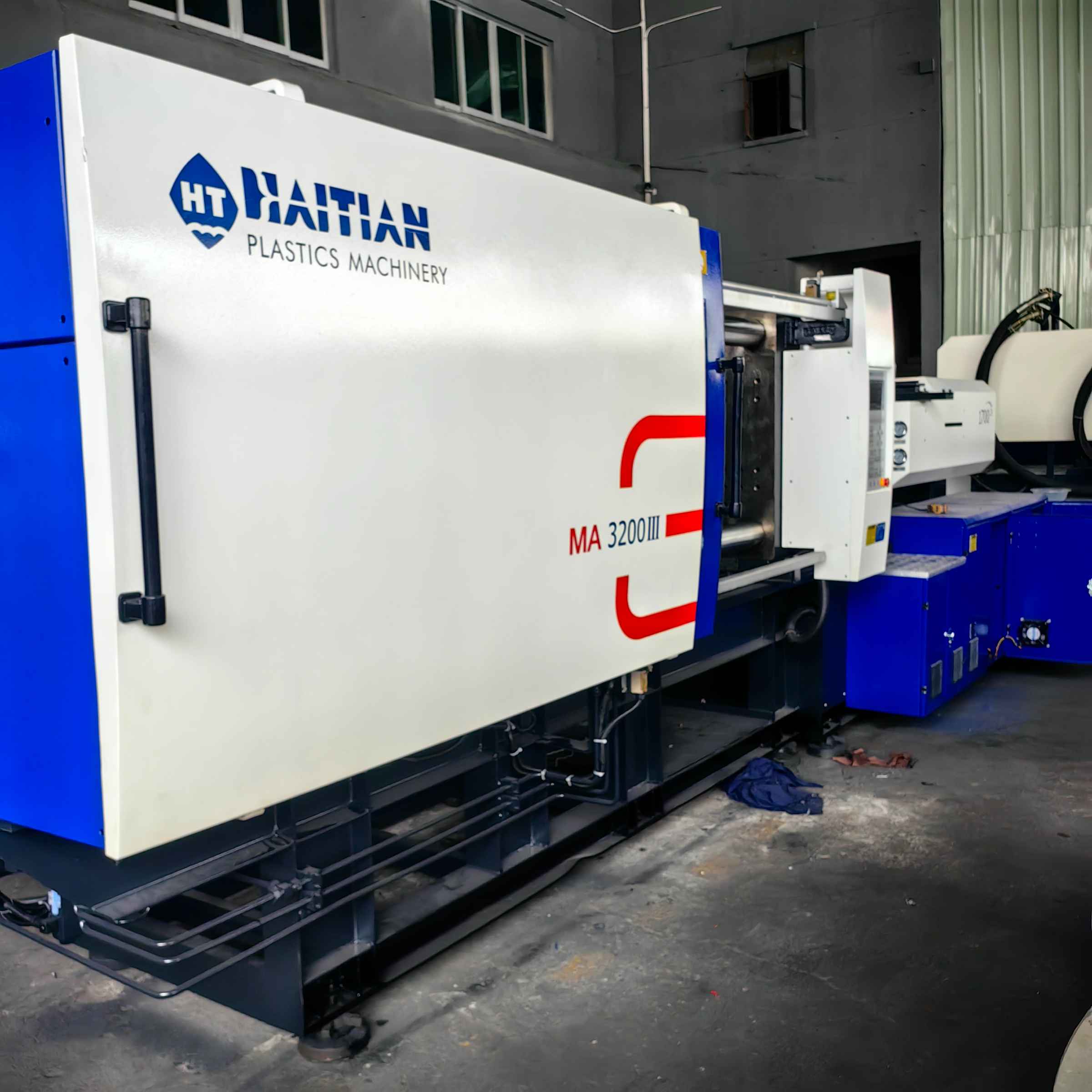
In the macroscopic world of industrial manufacturing, we often marvel at the power of massive machines. However, as modern technology migrates from our desktops to our wrists—and even inside our bodies—the most significant breakthroughs are occurring at a scale nearly invisible to the naked eye. In the realm of high-end manufacturing, the greatest challenge is no longer “bigger,” but “exquisitely smaller.”
At the heart of this miniaturization revolution is the rubber injection molding machine specifically engineered for micro-precision. Whether it is the microscopic seal surrounding a smartwatch’s heart-rate sensor, the ultra-thin micro-flow valve in an insulin pump, or the flexible “vertebrae” of a robotic endoscope, these millimeter-scale rubber components act as the “flexible joints” of modern innovation. This article explores how ultra-precision injection technology masters the volatile nature of elastomers to breathe life and reliability into the most sophisticated devices of our age.
1. The Invisible Guardians: Why Micro-Precision Rubber Matters
In a smartphone or a medical implant, a failure in a component the size of a grain of sand can lead to the total collapse of the system. In these “square-inch” environments, rubber components serve two vital roles: Sealing and Articulation.
The Waterproofing Shield of Wearables
The “Vascular” Control of Medical Tech
In minimally invasive surgical tools or drug delivery systems like insulin pumps, rubber components act as micro-valves. These parts must be flexible enough to respond to minute pressure changes yet resilient enough to maintain a hermetic seal over millions of cycles. Here, the rubber is not just a part; it is a functional “joint” that mimics the organic flexibility of the human body.
2. Mastering the “Micro-Volume” Logic: The Precision Machine
Standard injection molding logic fails when dealing with parts that weigh less than a fraction of a gram. A specialized rubber injection molding machine for micro-parts must rewrite the rules of fluid dynamics and thermal control.
Microliter Injection Accuracy
When the total volume of a part is only a few microliters, the “shot size” must be controlled with surgical precision.
-
Precision Plungers: Unlike large-scale screws, micro-molding often utilizes specialized plungers that can dispense material with a resolution of 0.01g.
-
Cold Runner Systems: To prevent material waste and premature curing (scorch), advanced machines use sophisticated cold runner systems that keep the rubber at an exact temperature until the very microsecond it enters the heated mold cavity.
Zero-Defect Flash Control
In micro-parts, “flash” (excess material at the seam) isn’t just an aesthetic flaw—it’s a functional failure. On a 2mm seal, a 0.05mm flash can prevent the component from fitting into its housing. High-end machines utilize ultra-high clamping force, stability, and vacuum-assisted venting to ensure that the rubber fills the microscopic cavities perfectly, leaving a clean, “zero-defect” edge.
3. Material Science: Liquid Silicone and High-Performance Elastomers
The “Flexible Joint” requires materials that can be processed at high speeds without losing their molecular integrity.
-
LSR (Liquid Silicone Rubber): Highly favored in the medical and wearable sectors for its biocompatibility and extreme fluidity. A precision rubber injection molding machine designed for LSR must manage a “water-like” viscosity while ensuring the material cures into a stable, high-strength form.
-
Fluoroelastomers (FKM): Used in environments where chemical resistance is paramount. Precision molding ensures that these expensive, high-performance materials are used with maximum efficiency and minimum waste.
4. The “Flexible Life”: Injecting Reliability into MedTech
In minimally invasive surgery, the endoscope must be able to navigate the complex curves of the human anatomy.
-
Micro-Bellows and Joints: The “bending section” of an endoscope is often composed of a series of micro-injected rubber segments. These allow the device to flex $180^\circ$ without kinking or breaking.
-
Biocompatible Sealing: Every medical component must withstand sterilization (autoclave or Gamma radiation). Precision molding ensures that the surface of the rubber is non-porous and free of microscopic cracks where bacteria could hide.
5. Why the Machine Choice is Strategic
For manufacturers, the decision to invest in a dedicated micro-precision rubber injection molding machine is a calculation of long-term survival.
-
Yield Maximization: In micro-manufacturing, a 1% increase in yield can save thousands of dollars in high-cost medical-grade raw materials.
-
Market Entry Barriers: The ability to produce “impossible” parts—such as over-molded rubber on micro-metal inserts—allows manufacturers to enter high-margin sectors like aerospace and neurosurgery.
-
Automation Readiness: Precision machines are designed to integrate with robotic “pick-and-place” systems, allowing for 24/7 production with minimal human intervention.
6. Conclusion: The Grandeur of the Small
The future of technology is increasingly intimate. As we continue to integrate electronics into our clothing, our accessories, and our bodies, the demand for the “Flexible Joint” will only grow.
The rubber injection molding machine is the silent architect of this future. By mastering the micro-scale, these machines are doing more than just shaping parts; they are providing the “flexible soul” that allows rigid electronics to coexist with the soft, dynamic reality of human life. In the space between a millimeter and a micron, precision rubber molding is crafting the reliability that our modern world depends on.


Add comment