
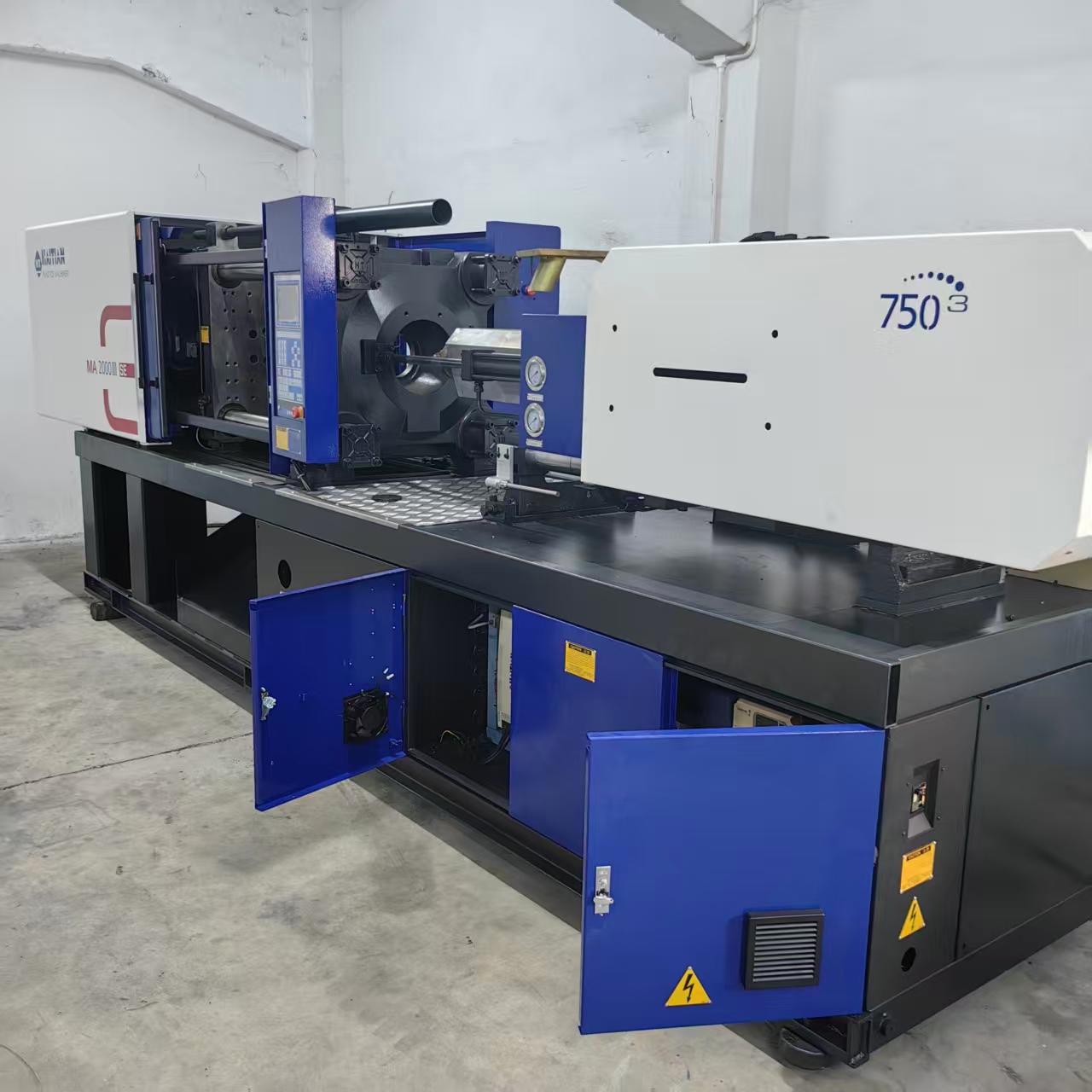
In the competitive world of plastic manufacturing, profitability is often won or lost in the margins of operational efficiency. While many factory managers focus on raw material costs, the “invisible” drain on the balance sheet is often the energy inefficiency of the machinery itself. For decades, the debate between vertical and horizontal architectures has persisted, but when viewed through the lens of Lifecycle Cost (LCC) and mechanical physics, the horizontal injection machines emerge as the superior champion of energy conservation.
The secret lies in “Gravity-Coupled Design.” By aligning power output with clamping and injection forces, horizontal machines avoid gravity-related energy loss. Therefore, they remove the hidden “energy tax” caused by vertical resistance. When paired with servo-hydraulic or all-electric systems, efficiency improves further. Consequently, energy use drops about 15% per mold cycle. This logic explains why horizontal architecture supports long-term sustainable production.
1. The Physics of Efficiency: Aligning Forces
The fundamental energy advantage of a horizontal injection machine stems from basic Newtonian physics. In any mechanical system, energy is lost whenever a force must be exerted to counteract a non-productive resistance—the most persistent of which is gravity.
The “Zero-Gravity” Movement Axis
In a horizontal machine, the heavy clamping unit and the injection screw move along a horizontal plane.
-
The Action: The motor or hydraulic cylinder pushes the platen forward to close the mold.
-
The Efficiency: Because the movement is perpendicular to the force of gravity, the power system does not have to “lift” the weight of the mold or the platen to initiate movement.
-
The Contrast: In a vertical machine, every opening stroke requires the system to fight gravity to hold the upper mold plate in place, and every closing stroke requires controlled braking against gravity. This constant “lifting and braking” cycle is a silent energy thief that the horizontal design simply avoids.
Linear Alignment of the Power Train
In a premium horizontal injection machine, power flows in a straight line. Specifically, the servo motor aligns with clamping and injection forces. As a result, energy loss from gears and force redirection is minimized. Therefore, almost all generated torque transfers directly to molding.
2. Quantifying the 15% Savings: The Lifecycle Perspective
To understand where the 15% energy reduction comes from, we must look at the three primary phases of the injection cycle where horizontal architecture excels.
Phase I: Low-Friction Clamping
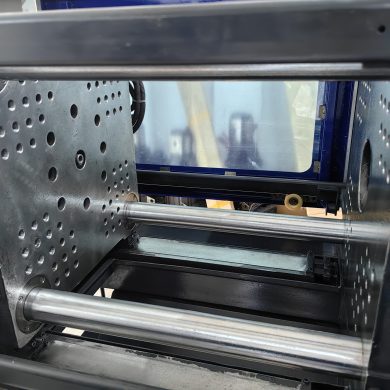
Horizontal machines utilize high-precision linear guides or tie-bar supports that allow the massive moving platen to “glide.”
-
Reduced Inertia: Because the weight is supported by the machine frame rather than being suspended, the initial torque required to “break” the static friction is significantly lower.
-
Energy Impact: This results in a 3-5% energy saving during the high-speed mold closing and opening phases.
Phase II: Precise Injection Pressure
When the screw injects molten plastic into the cavity, the horizontal injection machines benefit from a stable, centered center of gravity.
-
Stability equals Efficiency: There is no “tilting moment” caused by gravity acting on the injection unit. This allows the servo system to maintain a high-pressure hold with minimal “compensatory energy.”
-
Energy Impact: This stability contributes another 4-6% to the overall efficiency by reducing the energy required for pressure maintenance (holding pressure).
Phase III: Cooling and Idle Efficiency
Modern horizontal machines are almost exclusively equipped with servo-hydraulic systems.
-
On-Demand Power: Unlike traditional fixed-displacement pumps that run at 100% even during the cooling phase, the servo motor in a horizontal machine slows down to near-zero RPM when movement is not required.
-
System Synergy: Because the horizontal structure is naturally stable and requires no energy to “hold” the mold open against gravity, the motor can truly rest, maximizing the “idle” energy savings.
3. The “Unseen” Savings: Thermal and Maintenance Efficiency
Energy efficiency isn’t just about electricity; it’s about the total energy “footprint” of the machine’s operation.
Optimized Heat Dissipation
Horizontal machines typically have a more open layout, allowing for better natural air convection around the barrel and the hydraulic tank.
-
Action: This reduces the load on the factory’s central cooling system (chillers).
-
Benefit: When the machine runs cooler, the hydraulic oil maintains its viscosity longer, reducing internal “slippage” in the pump and maintaining high mechanical efficiency over 24-hour shifts.
Reduced Component Wear
When a machine operates “with” gravity rather than against it, the seals, bearings, and bushings experience more uniform loading.
-
Longevity: Uniform wear leads to fewer internal leaks in the hydraulic circuit.
-
Impact: A system with zero internal leakage is inherently more energy-efficient, as the pump doesn’t have to work harder to compensate for lost pressure.
4. Integration with Industry 4.0: Digital Energy Tracking
Today’s horizontal injection machine is not just a mechanical tool; it is a data-driven energy manager.
-
Real-Time Monitoring: Advanced controllers allow operators to track the “Kilowatt-hour per kilogram” (kWh/kg) ratio for every mold.
-
Closed-Loop Optimization: The machine can automatically adjust its acceleration and deceleration curves based on the mold weight, finding the “Optimal Energy Point” where speed and consumption are perfectly balanced. This digital “fine-tuning” often captures the final 2-3% of the 15% total savings goal.
5. Conclusion: Investing in the Future of Efficiency
The 15% energy saving is a proven engineering outcome. Rather than marketing hype, it results from gravity-assisted design. By eliminating resistance against gravity, power loss is reduced. Moreover, the optimized power path improves mechanical efficiency. Consequently, horizontal injection machines deliver higher energy ROI. For manufacturers looking to future-proof their operations against rising electricity costs and tightening carbon regulations, the choice is clear.


Add comment