
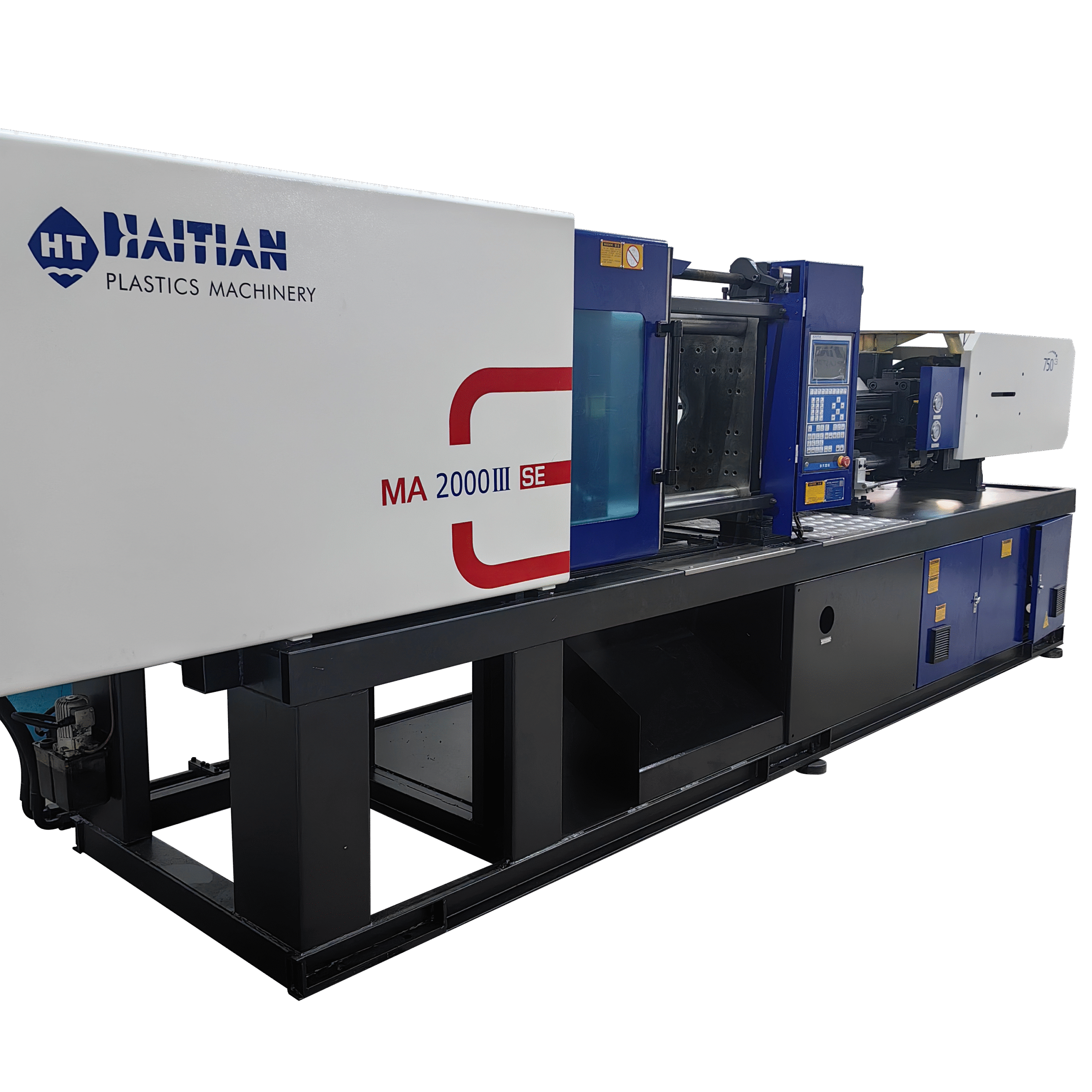
In the traditional world of manufacturing, a persistent myth suggests that “small scale” equates to “low precision.” For years, engineers assumed that only massive, house-sized industrial presses could deliver the consistency required for high-tolerance components. However, the rise of specialized benchtop injection molding machines has shattered this stereotype.
By integrating high-response servo motors, multi-stage PID temperature management, and sophisticated pressure-position feedback systems, these compact powerhouses now achieve a staggering repetition accuracy of 0.01 grams. For industries such as medical device prototyping, micro-electronics, and aerospace research, this level of precision is not just an advantage—it is a requirement. This article explores the engineering trifecta that allows miniature machines to rival the stability of their industrial giants.
1. The Challenge of “Micro-Volume”: Why Every Milligram Counts
In large-scale molding, a variation of 0.1 grams might represent a negligible fraction of the total shot weight. However, when producing micro-gears, surgical clips, or delicate connectors that weigh less than 1 gram in total, a deviation of 0.1 grams constitutes a catastrophic 10% error.
The Volumetric Struggle
Traditional hydraulic systems often struggle with the “inertia” of moving massive amounts of oil to move a small screw. This results in a “drift” where the final cushion position varies slightly with every cycle. Benchtop injection molding machines bypass this by utilizing direct-drive technology. By reducing the physical mass of the injection unit and replacing hydraulic fluid with digital pulses, these machines eliminate the “sponginess” of the injection stroke, turning a macro-process into a micro-surgical procedure.
2. The Heart of Precision: High-Response Servo Drives
The move from hydraulic to all-electric servo drives is the single most significant factor in achieving 0.01g accuracy.
Digital Position Control
A servo motor operates on a “Pulse-to-Position” logic. In a premium benchtop injection molding machine, the servo drive can divide a single rotation into hundreds of thousands of increments.
-
The Action: The controller sends a specific number of pulses to move the injection screw to an exact coordinate.
-
The Result: The screw stops at the same “Cushion Position” every time, with a deviation measured in microns. This ensures that the volume of plastic pushed into the mold cavity remains identical across thousands of cycles, preventing “short shots” or “flash” on the parts.
Dynamic Pressure Adjustment
Unlike simple motors, servo systems provide constant feedback. If the material viscosity changes slightly, the servo drive detects the increased resistance and adjusts its torque output in milliseconds to maintain a constant injection speed. This “High-Response” capability ensures that the pressure curve remains stable, even if the ambient temperature of the workshop fluctuates.
3. Thermal Stability: Multi-Stage PID Temperature Management
Plastic is a non-Newtonian fluid, meaning its flow characteristics change drastically with even a 1℃ temperature shift. To achieve 0.01g precision, the melt must be perfectly homogenous.
The PID Control Logic
Modern benchtop injection molding machines employ Proportional-Integral-Derivative (PID) controllers for their heating zones.
-
Proportional: Rapidly heats the barrel to the target.
-
Integral: Corrects for long-term “drift” caused by the environment.
-
Derivative: Predicts and prevents “Overshoot,” ensuring the temperature doesn’t spike and degrade the polymer.
Localized Heating Zones
Because the barrel of a benchtop machine is small, heat can dissipate quickly. To counter this, engineers use multiple independent heating zones—usually at the nozzle, the middle barrel, and the feed throat. By maintaining a steep but stable temperature gradient, the machine ensures that the plastic transitions from solid pellets to a fluid melt at the same point in the screw’s flight every time.
4. Closed-Loop Feedback: The “Nervous System” of the Machine
Precision is not just about the command; it is about the confirmation. A “Closed-Loop” system is a continuous conversation between the machine’s sensors and its brain.
-
Position Feedback: Linear encoders monitor the screw’s travel in real-time. If the screw hasn’t reached its target, the controller forces it to finish the stroke before beginning the cooling phase.
-
Pressure Transducers: Sensors located behind the screw or inside the mold cavity monitor the “Packing Pressure.” If the pressure drops, the machine compensates instantly.
-
The Outcome: This “self-correcting” behavior allows benchtop injection molding machines to maintain industrial-grade stability over a 24-hour production run, making them ideal for small-batch manufacturing where quality control is paramount.
5. Redefining ROI: When Small Scale Becomes the Big Winner
For many companies, the transition to benchtop injection molding machines is driven by more than just precision—it is about the economics of the “Perfect Part.”
-
Reduced Material Waste: When your precision is 0.01g, your sprue and runner systems can be significantly smaller. This is vital when working with expensive medical-grade PEEK or bioabsorbable polymers.
-
Energy Efficiency: A servo-driven desktop unit typically uses 80% less energy than a hydraulic press, as it only consumes power when it is actively moving.
-
Faster Iteration: Because the molds for benchtop machines are smaller and easier to change, engineers can test five different iterations in the time it would take to set up a single run on a large machine.
6. Conclusion: The Miniature Powerhouse
The achievement of 0.01g repetition accuracy in benchtop injection molding machines proves that size is no longer a barrier to excellence. By harnessing the synergy of servo-drive position control, multi-stage PID thermal stability, and rigorous closed-loop feedback, these machines have become the “Swiss Watches” of the plastic industry.
For the modern manufacturer, these units offer a path to “Industrial Quality on a Desktop.” They provide the freedom to innovate at a micro-scale without sacrificing the macro-standard of reliability. In the world of precision engineering, the smallest details often yield the greatest results—and in the case of micro-molding, that detail is measured to the nearest hundredth of a gram.

Add comment