
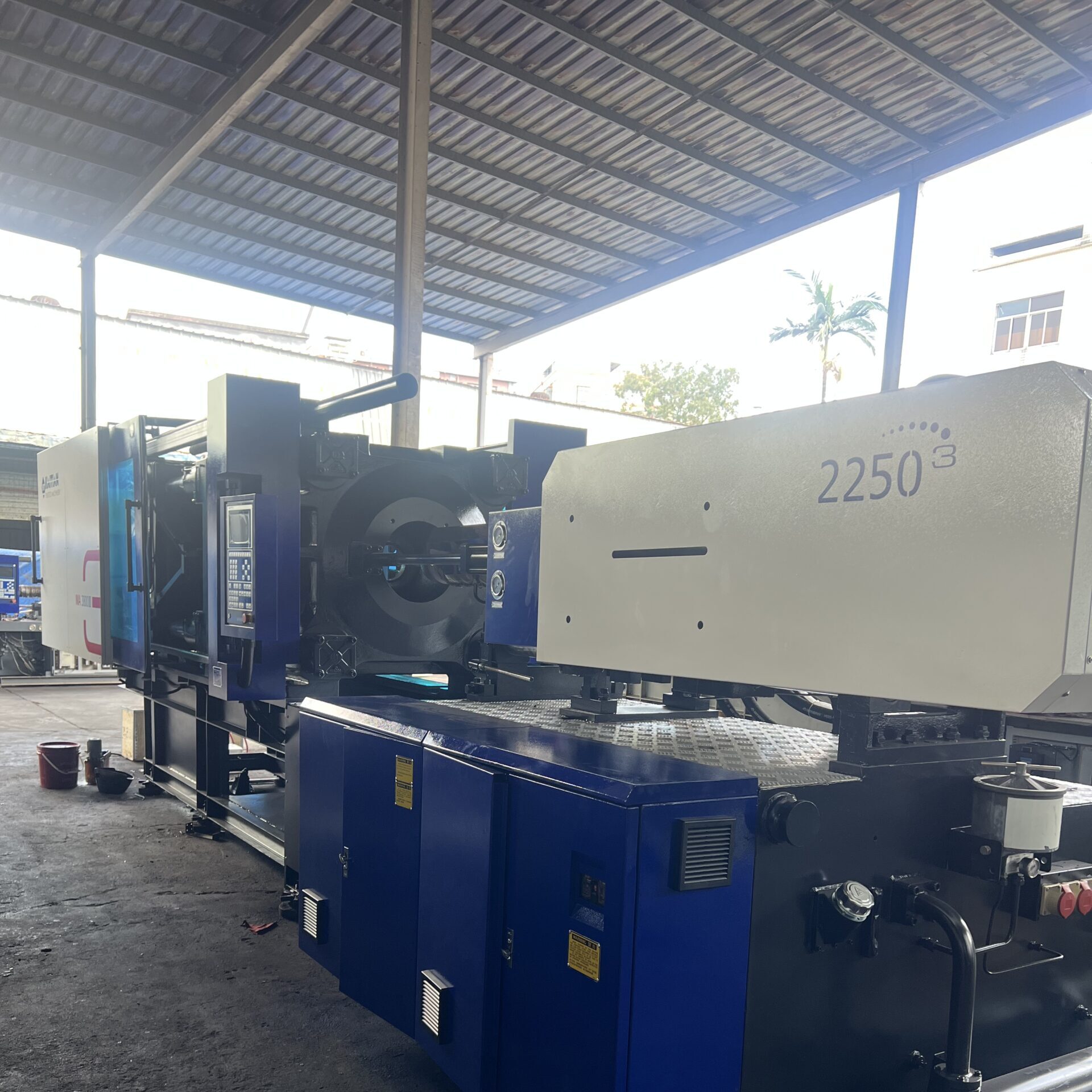
When purchasing a used injection molding machine, many buyers first compare machine models, production years, and prices. However, choosing equipment only based on appearance or cost often leads to unexpected problems after delivery.
The correct approach is to define production requirements before contacting suppliers.
The most important used injection molding machine selection parameters include:
- Clamping force
- Injection volume
- Tie bar spacing and mold size compatibility
These three factors determine whether the machine can safely install the mold, fill the material correctly, and maintain stable production quality.
Before requesting quotations, buyers should prepare these technical specifications to avoid purchasing unsuitable equipment.
Why Is Clamping Force the First Parameter to Check?
How Does Clamping Force Prevent Flash Defects?
Clamping force is one of the most important specifications of an injection molding machine because it determines whether the mold can remain closed during injection.
During molding, molten plastic enters the mold cavity under high pressure. If the injection pressure exceeds the machine’s clamping capability, the mold may slightly open, causing:
- Flash or burrs around the product edge
- Incorrect product dimensions
- Reduced surface quality
- Increased post-processing work
Therefore, sufficient clamping force is essential for stable production.
How to Calculate Injection Molding Machine Clamping Force?
A commonly used calculation method is:
Clamping Force (tons) ≈ Projected Area of Product (cm²) × Molding Pressure (kg/cm²) × Safety Factor
The required molding pressure depends on the plastic material and product structure.
Typical molding pressure ranges:
| Material Factor | Approximate Pressure Range |
|---|---|
| Standard thermoplastics | 300-500 kg/cm² |
| Engineering plastics | 500-800 kg/cm² |
In practical applications, many manufacturers use an estimated requirement of:
3-5 tons of clamping force per 1 cm² projected area
A safety margin of around 10%-20% is usually recommended to handle pressure fluctuations and production variations.
Why Is Stable Clamping Force Important for Precision Products?
For products requiring high-dimensional accuracy, the maximum clamping force value is not the only consideration.
Buyers should also evaluate:
- Clamping force stability
- Hydraulic system condition
- Toggle mechanism wear
- Machine control accuracy
A used injection molding machine with unstable clamping performance may create inconsistent product quality even if its rated tonnage appears sufficient.
How Should Injection Volume Match Product Requirements?
Why Is Injection Volume Matching Important?
The second critical parameter is injection volume.
The injection volume determines how much molten plastic the machine can inject during one molding cycle.
The ideal condition is that the actual product weight is approximately:
70%-85% of the machine’s theoretical injection capacity
This range helps maintain stable molding performance.
What Happens When Injection Volume Is Incorrect?
Selecting the wrong injection volume can create two common problems.
Insufficient Injection Volume
If the machine capacity is too small, it may cause:
- Short shots
- Incomplete filling
- Poor surface quality
- Increased production waste
This situation is often described as a machine being too small for the application.
Excessive Injection Volume
A machine with excessive injection capacity may also create problems.
When plastic remains inside the barrel for too long:
- Material may degrade
- Color consistency may change
- Plastic properties may decrease
This is especially important when processing heat-sensitive materials.
How to Calculate Injection Volume Requirements?
Before purchasing a used plastic injection molding machine, buyers should calculate:
- Product weight
- Runner and gate weight
- Number of cavities
- Material density
- Production cycle requirements
The selected machine should provide enough injection capacity while maintaining efficient material residence time.
Why Is Tie Bar Spacing a Non-Negotiable Specification?
How Does Tie Bar Spacing Affect Mold Installation?
The tie bar spacing, also called the tie bar inner distance, determines whether a mold can physically fit inside the machine.
This specification is a hard limitation.
Even if a machine has suitable:
- Clamping force
- Injection volume
- Price advantage
it cannot be used if the mold cannot pass through the tie bars.
What Should Buyers Check Before Purchasing?
Before buying a second-hand injection molding machine, confirm:
- Tie bar spacing
- Platen dimensions
- Maximum mold height
- Minimum mold thickness
- Maximum opening stroke
These dimensions should match current production molds or planned future molds.
A machine that cannot install the required mold creates one of the most expensive purchasing mistakes.
Used Injection Molding Machine Selection: Key Parameter Comparison
Which Specifications Should Be Confirmed First?
| Parameter | Why It Matters | Common Risk |
|---|---|---|
| Clamping Force | Prevents mold opening and flash defects | Product quality issues |
| Injection Volume | Ensures complete filling and stable cycles | Short shots or material degradation |
| Tie Bar Spacing | Determines mold compatibility | Mold cannot be installed |
These three parameters should be confirmed before evaluating machine brands, appearance, or pricing.
What Should Buyers Prepare Before Contacting a Used Injection Machine Supplier?
Used Injection Molding Machine Procurement Checklist
A professional procurement process starts with production requirements.
Before requesting quotations, buyers should prepare:
Product Information
- Product material
- Product weight
- Product size
- Required precision level
Mold Information
- Mold dimensions
- Mold weight
- Number of cavities
- Required clamping force
Machine Requirements
- Injection volume
- Tie bar spacing
- Automation requirements
- Production capacity
This information allows suppliers to recommend suitable equipment instead of simply offering available machines.
How to Avoid Commonly Used Injection Molding Machine Buying Mistakes?
Do Not Select Equipment Based Only on Price
A low-cost machine may create additional expenses through:
- Mold modification
- Production downtime
- Higher maintenance costs
- Lower product consistency
The best choice is not always the cheapest machine. It is the machine that matches the production requirements.
Inspect Machine Condition Beyond Technical Specifications
After confirming the basic parameters, buyers should also check:
- Hydraulic system performance
- Servo motor condition
- Controller operation
- Screw and barrel wear
- Previous working environment
- Maintenance records
A complete second-hand injection molding machine inspection helps reduce future operational risks.
Define Parameters Before Choosing a Used Injection Molding Machine
Selecting a used injection molding machine should begin with technical requirements, not available models or prices.
The three essential numbers every buyer should confirm first are:
- Required clamping force
- Required injection volume
- Minimum mold size and tie bar spacing
These specifications determine whether the machine can achieve stable production and support existing molds.
For manufacturers purchasing used injection molding equipment, a parameter-based selection process saves not only investment costs but also production time and future maintenance challenges.
Manyi provides professional used injection molding machine solutions, helping global buyers select suitable equipment based on production requirements, machine condition, and application needs.



Add comment