Industrial machinery wholesalers, plastics equipment brokers, and manufacturing consultants frequently guide factory owners through critical capital equipment acquisitions. Because choosing between brand-new machinery and pre-owned inventory directly impacts production uptime, profit margins, and long-term operational resilience, providing clear guidance on a used vs new injection molding machine purchase is a core responsibility for equipment dealers. Consequently, wholesale buyers often encounter hesitant clients who ask: “Our budget is tight, and buying a refurbished machine could save us a lot of capital, but we worry about hidden mechanical defects and expensive breakdowns. How can we balance upfront cost savings against long-term operational risks?”
Recommending the wrong equipment strategy can disrupt a client’s business. Pushing an underfunded startup into expensive new machinery strains their working capital, while guiding a precision medical molder toward an uninspected, worn-out machine leads to severe dimensional defects, hydraulic leaks, and costly downtime. This comprehensive B2B advisory guide breaks down the core financial trade-offs, provides a technical inspection checklist for pre-owned equipment, and presents a decision-making framework to help your clients maximize their return on investment.
1. Core Differences: Balancing Upfront Capital Savings Against Operational Risks
To help buyers make an informed choice, wholesalers must present a transparent comparison of both acquisition paths across total cost of ownership, energy efficiency, and warranty protection.
[New Injection Molding Machine]  ---> High Initial Capex | Full Warranty | Servo Energy Savings | Predictable Maintenance
[Used Injection Molding Machine] ---> 40%-60% Lower Capex | Rapid Delivery | Requires Strict Audit | Higher Maintenance Risk
The New Equipment Path: Low Risk, Maximum Efficiency
Investing in a brand-new machine offers full OEM warranty coverage (typically 1 to 2 years), modern servo-hydraulic or all-electric energy savings, and predictable maintenance costs. This path suits factory operators running continuous, high-precision production lines where unplanned downtime causes massive financial losses.
The Pre-Owned Equipment Path: Capital Conservation and Fast Deployment
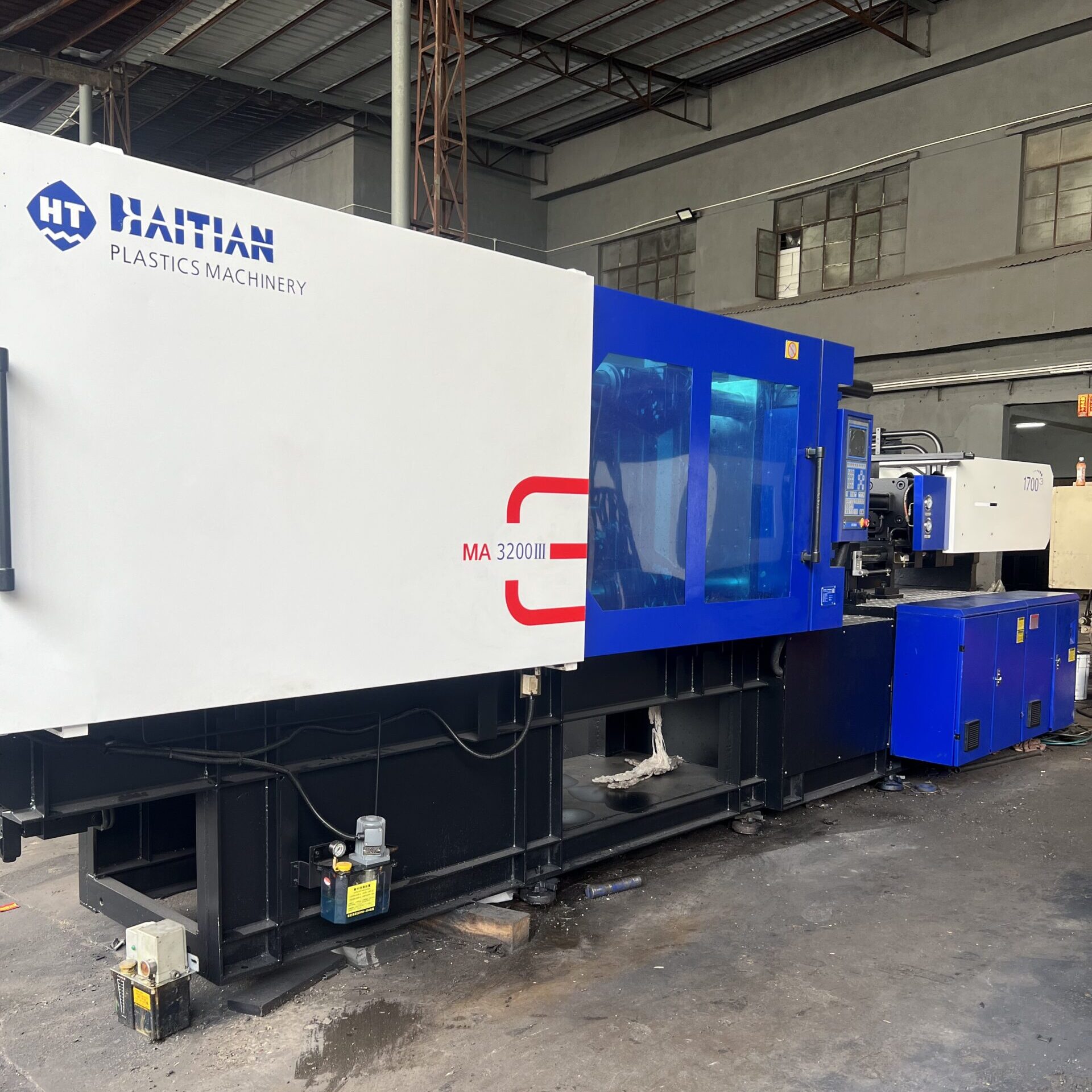
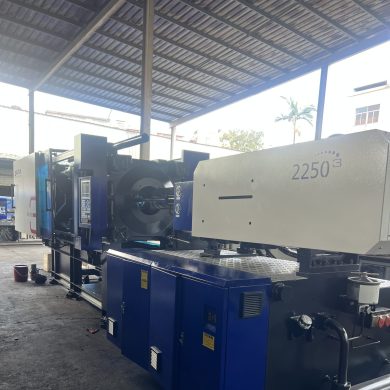
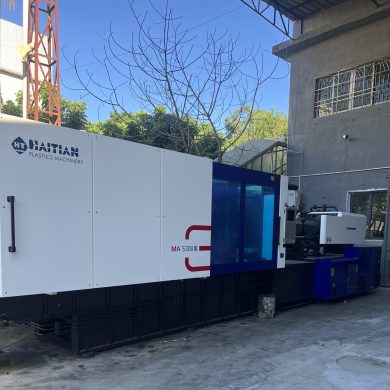
Purchasing pre-owned machinery reduces upfront capital expenditure by 40% to 60% compared to new factory orders. Furthermore, pre-owned units ship immediately, eliminating the multi-month lead times required for custom factory builds. However, buyers assume hidden risks, such as worn screw barrels, outdated PLC controllers, and aged hydraulic seals. Wholesalers can mitigate these risks by offering inspected, high-tier brand inventory (such as Haitian, FANUC, or Engel) paired with professional pre-purchase technical audits.
2. Technical Evaluation Framework: Critical Inspection Parameters
To safeguard your clients’ investments, your sales engineering team should conduct a rigorous four-point inspection before finalizing any pre-owned machinery deal:
[Pre-Owned Technical Audit]
  |--> Mechanical Structure  ---> Check platen parallelism & screw clearance (<0.6mm)
  |--> Hydraulic System       ---> Verify oil cleanliness (ISO 4406) & pump seals
  |--> Electronic Control     ---> Confirm PLC brand stability (Siemens/Mitsubishi/FANUC)
  |--> Operating History      ---> Audit total shot counts (design life: 3M-5M shots)
Mechanical Structural Integrity
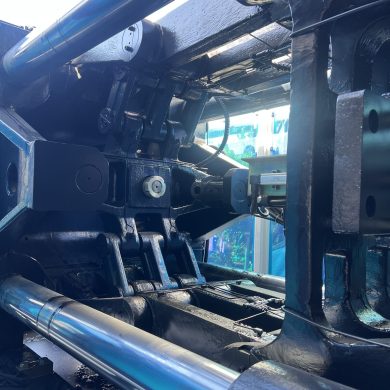
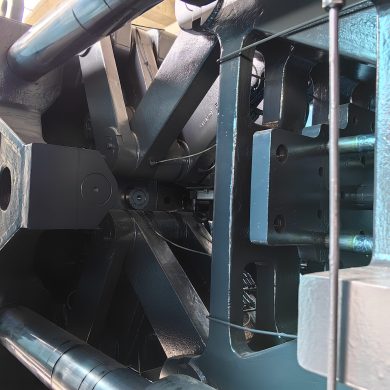
Inspect the platen parallelism, tie-bar wear, and the clearance between the screw and barrel. A screw-to-barrel clearance exceeding 0.6 mm causes severe melt backflow and shot inconsistency, signaling an immediate need for barrel replacement costs.
Hydraulic System Health
Check the hydraulic oil cleanliness against ISO 4406 standards, test the hydraulic pump pressure stability, and inspect all main manifold valves for oil leaks or thermal wear.
Control System and Electrical Electronics
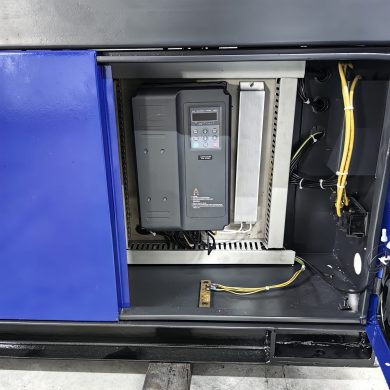
Verify the brand and generation of the PLC controller (such as Siemens, Mitsubishi, or FANUC). Ensure spare parts remain readily available in the local market, and verify that all emergency stops and safety gates operate properly.
Machine Service History and Total Shot Counts
Audit the machine’s historical shot counter. Most premium industrial machines feature a design lifespan of 3 million to 5 million shots. Reviewing past maintenance logs helps confirm whether previous operators performed regular oil changes and greasing.
Investment Path Decision Matrix
| Acquisition Evaluation Factor | Brand-New Injection Molding Machine | Inspected Pre-Owned Machine (Tier-1 Brand) |
| Initial Capital Expenditure | Full market price investment | 40% to 60% lower upfront cost |
| Delivery and Installation Lead Time | 2 to 5 months for factory build | Immediate delivery from warehouse stock |
| Energy Consumption Profile | Latest servo-hydraulic or all-electric drives | Varies; older hydraulic models consume more power |
| Equipment Warranty and Support | 1–2 years full OEM factory coverage | Dealer-backed warranty or sold “as-is” |
| Optimal Used Plastic Machine ROI Target | Long-term stable multi-year production | Short-term projects, fast payback, budget limits |
3. Strategic Advisory Playbook: Matching Client Profiles to Equipment Paths
Machinery wholesalers can streamline customer negotiations and build long-term trust by applying a clear three-tier recommendation strategy:
-
Recommend New or Nearly-New Machines for High-Precision Operations: If your client manufactures tight-tolerance automotive parts, medical devices, or thin-wall packaging that runs 24/7, advise them to choose new or nearly-new machinery. In these applications, high precision and maximum uptime outweigh initial capital savings.
-
Recommend Certified Pre-Owned Machines for Budget-Conscious Buyers: If your client has a limited budget but possesses basic in-house maintenance capabilities, recommend an inspected, brand-name used machine. This strategy provides a fast used plastic machine ROI while protecting their working capital.
-
Propose Equipment Leasing or Short-Term Rental for Fluctuating Orders: If your client is taking on a short-term trial project or facing uncertain seasonal demand, propose an equipment lease or rental option. Leasing allows them to fulfill production contracts without committing to a permanent injection molding machine investment.
Conclusion: Drive Client Success through Transparent Equipment Selection
In conclusion, helping your downstream manufacturing clients choose between a new or pre-owned injection molding machine requires balancing upfront capital savings against operational safety.
Stop letting your clients struggle with tough equipment decisions alone or risk their working capital on uninspected, low-grade machinery that causes costly breakdowns. Guiding your buyers toward certified, fully audited pre-owned machinery or purpose-built new equipment ensures they achieve fast capital payback, low maintenance risks, and stable production across every contract. We inspect every hydraulic circuit, measure every screw clearance, and test every control board to satisfy strict industrial performance standards.
Contact our equipment sales engineering team today to review our current machinery inventory and request a detailed wholesale proposal.

Add comment