
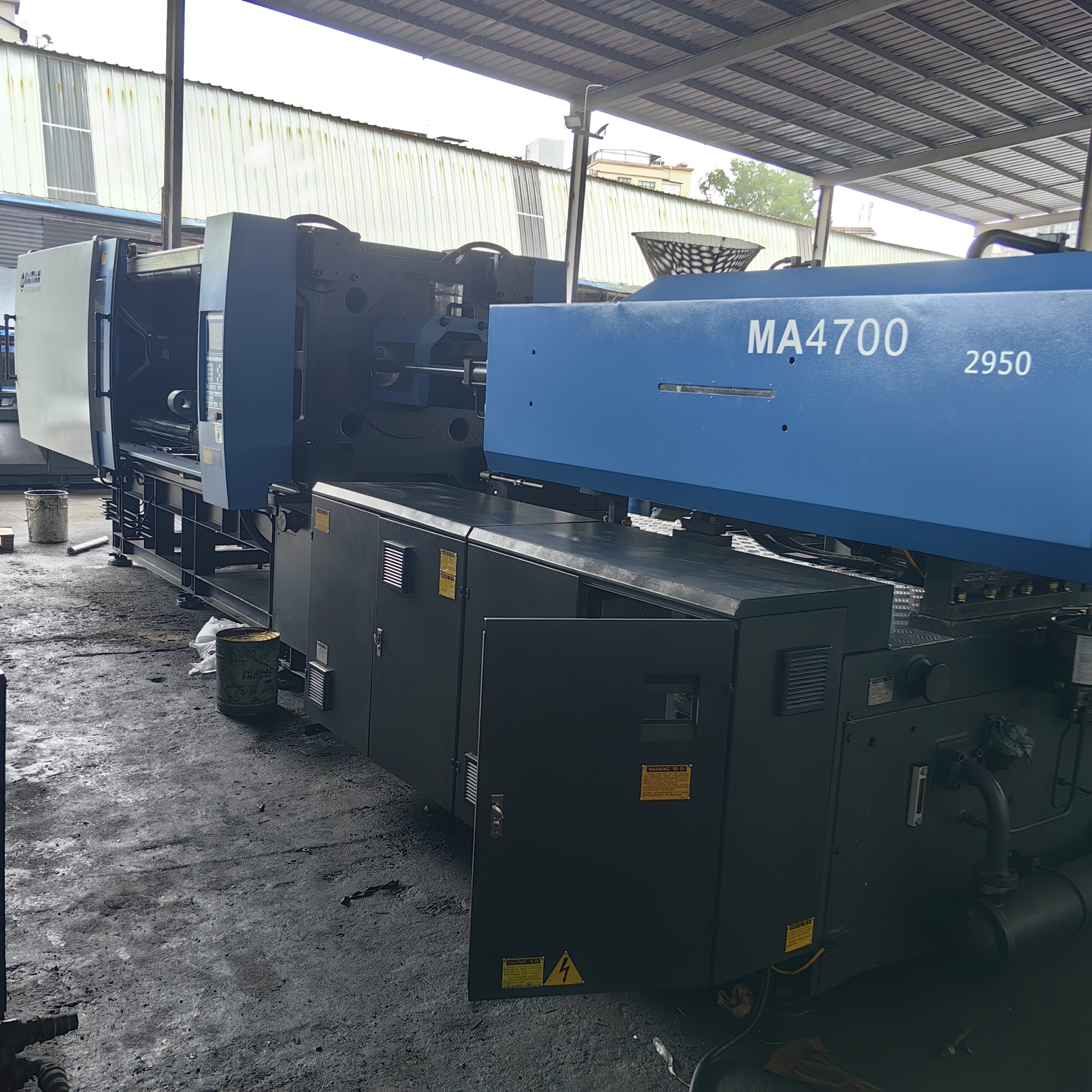
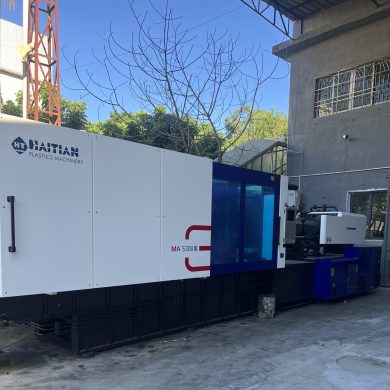
When setting up or expanding a PET preform production line, the most critical capital procurement question is: “How large a machine do I actually need?” In the injection molding marketplace, scanning generic datasheets reveals a confusing array of clamping forces—250T, 320T, 400T, and beyond. However, listing raw technical specs does not help you solve your core business calculation: matching machine capacity to your commercial sales targets. If you undersize the machine, you will fail to hit your contract deadlines. If you excessively oversize it, you waste valuable factory floor space and consume unnecessary electricity, dragging down your return on investment (ROI). For factories looking to scale cost-effectively, sourcing a premium pre-owned injection press offers an exceptional shortcut—but only if you size the clamping force correctly.
This guide provides a practical engineering framework to calculate your required clamping force based directly on your annual production goals.
1. The Core Relationship: Matching Annual Output to Machine Tonnage
To establish a baseline, we assume a standard industrial operating schedule: 300 working days per year, running 24 hours a day at an average operational efficiency of 85%. This equates to roughly $6,120$ net production hours annually.
Based on these standardized high-volume production metrics, perform manufacturing lines scale across three main tonnage brackets:
a. Bracket A: 250T to 300T Clamping Force (Small-to-Medium Scaling)
-
Target Annual Capacity: 5 million to 10 million performances per year.
-
Typical Mold Configuration: 16-cavity to 24-cavity molds.
-
Best Uses: Start-up bottling plants, specialized regional cosmetic packaging, or low-volume, heavy-walled edible oil containers.
b. Bracket B: 320T to 450T Clamping Force (The Industrial Sweet Spot)
-
Target Annual Capacity: 10 million to 25 million preforms per year.
-
Typical Mold Configuration: 32-cavity to 48-cavity molds.
-
Best Uses: High-frequency water and carbonated soft drink (CSD) bottling lines supplying regional distributors. This represents the most sought-after bracket in the guide to selecting used injection molding Machines market due to its high liquidity and flexible production capabilities.
c. Bracket C: 500T and Above (High-Velocity Mass Production)
-
Target Annual Capacity: 30 million+ performances per year.
-
Typical Mold Configuration: 72-cavity to 96-cavity (or larger) valve-gate systems.
-
Best Uses: Tier-1 multinational beverage suppliers operating high-speed, continuous-duty packaging hubs.
2. The Hidden Variables: Why Output Isn’t the Only Metric
While annual output targets provide an excellent starting benchmark for injection molding machine tonnage selection, you cannot finalize your procurement contract without evaluating three critical physical variables of your target part design:
Variable A: Preform Weight and Shot Size
A 500ml water bottle preform typically weighs around 15 to 18 grams, whereas a 2-liter carbonated beverage preform can easily exceed 45 grams. Even if your annual unit count target is modest, heavy-walled preforms require a much larger injection unit volume (shot size). The machine’s clamping structure must physically scale up to house the massive plasticizing screw required to melt that volume of resin per cycle.
Variable B: Mold Cavitation and Projected Area
Clamping force exists to counteract the internal hydraulic pressure of molten plastic trying to push the mold halves apart. The formula for the required clamping force ($F$) is:
Where $P_{\text{cavity}}$ is the internal cavity pressure (typically 400 to 600 bar for PET), $A_{\text{projected}}$ is the cross-sectional area of the preform lip, and $n$ is the number of mold cavities.
-
Consequently, running a 48-cavity mold requires significantly more physical tonnage than running a 16-cavity mold, making the same preform, simply because the cumulative projected surface area is three times larger.
Variable C: Material Flowability and Injection Speed
PET is highly viscous and requires fast injection speeds to fill thin-walled profiles before the melt freezes. High-speed injection spikes transient cavity pressures. If your preform design features an ultra-thin wall section, you must increase your tonnage safety buffer to prevent the mold from breathing or parting micro-millimeters during peak injection velocity.
3. Sizing Quick Reference Matrix
Use this fast-check lookup table to cross-reference your annual business growth goals with real-world equipment footprints.
| Target Annual Output (Units) | Recommended Cavity Count | Preform Weight Range | Recommended Machine Tonnage Range |
| 5M – 10M | 16 to 24 Cavities | 15g – 35g | 250T – 300T |
| 10M – 20M | 32 to 48 Cavities | 15g – 28g | 320T – 400T |
| 20M – 35M | 48 to 72 Cavities | 18g – 45g | 450T – 550T |
| 35M+ | 72 to 96+ Cavities | 12g – 50g | 600T+ (High-Speed System) |
4. The Danger of “Bigger is Always Better.”
When sourcing second-hand machinery, buyers often face a common temptation: “This 500T machine is priced only slightly higher than a 320T machine, so I’ll buy the larger one to future-proof my factory.” In specialized PET preform production capacity calculation setups, this mindset presents significant operational risks:
-
Tooling Fatigue and Crush Damage: Running a smaller 16-cavity mold inside a massive 500-ton press applies excessive localized compressive stress to the mold base parting lines. Without careful tonnage profiling adjustments, the immense clamping force can crush the delicate venting slots or distort the neck ring inserts, leading to flash defects.
-
Energy Inefficiency: Larger machines utilize bigger hydraulic pumps or higher-kilowatt servo motors. Running a small mold on an oversized machine means you are paying to heat up a giant barrel and stroke a heavy clamping platen for zero financial return, directly inflating your per-unit manufacturing cost.
Conclusion: Formulate Your Production Blueprint First
In high-volume packaging manufacturing, profitability is determined by balancing asset capitalization against active throughput requirements.
Stop guessing your equipment specifications or relying on generic machinery brochures. By calculating your exact target annual volumes, defining your preform’s physical projected area, and utilizing a reliable PET preform production capacity calculation matrix, you ensure your next workshop upgrade runs at its peak efficiency window. Explore Manyi’s thoroughly inspected, high-performance pre-owned inventory today to find a verified, budget-friendly injection molding solution engineered to hit your manufacturing targets without over-allocating capital.

Add comment